Showing posts with label Yellow. Show all posts

Sunday, July 24, 2016

Yellow

Yellow
Chestnut
Castaño
Kill Bill
Macondo
Macbeth
Sledge

Gen.4:5
"And the LORD said unto him, Therefore whosoever slayeth Cain, vengeance shall be taken on him sevenfold. And the LORD set a mark upon Cain, lest any finding him should kill him."


Kristina Pimenova


Con mariposas amarillas virtuales recuerdan al colombiano más mágico: Gabo | | Efecto Cocuyo


Castaño

Chess: "Yellow" "Chestnut" "Castaño" "Kill Bill" "Macondo" "Macbeth" "Sledge"


Macbeth

.

ACT I SCENE III A heath near Forres.
Thunder. Enter the three Witches.
First Witch Where hast thou been, sister?
Second Witch Killing swine.
Third Witch Sister, where thou?
First Witch A sailor's wife had chestnuts in her lap,
And munch'd, and munch'd, and munch'd:-- 5
'Give me,' quoth I:
'Aroint thee, witch!' the rump-fed ronyon cries.
Her husband's to Aleppo gone, master o' the Tiger:
But in a sieve I'll thither sail,
And, like a rat without a tail, 10
I'll do, I'll do, and I'll do.
Second Witch I'll give thee a wind.
First Witch Thou'rt kind.
Third Witch And I another.
First Witch I myself have all the other, 15
And the very ports they blow,
All the quarters that they know
I' the shipman's card.
I will drain him dry as hay:
Sleep shall neither night nor day 20
Hang upon his pent-house lid;
He shall live a man forbid:
Weary se'n nights nine times nine
Shall he dwindle, peak and pine:
Though his bark cannot be lost, 25
Yet it shall be tempest-tost.
Look what I have.
Second Witch Show me, show me.
First Witch Here I have a pilot's thumb,
Wreck'd as homeward he did come.


Friday, February 4, 2011

El Roble

Ribbon
Yellow Ribbon
Oak
Prov. 19:6 
"Many will intreat the favour of the prince: and every man is a friend to him that giveth gifts."
Toto
by bigsister 861
Chess: "Ribbon" "Yellow" "Oak"

Saturday, February 6, 2010

The God's Script

El Oro de los Tigres
Blue Print
Arizona
Cheetah

"The Refrigerator"
Colonel Sanders
Tombstone
Yellow
Seven
"El Niño"

Psalm 44:14
 "Thou makest us a byword among the heathen, a shaking of the head among the people.

Judg 14:14
"And he said unto them, Out of the eater came fo
rth meat, and out of the strong came forth sweetness. And they could not in three days expound the riddle." 


Psalm 91:14
"Because he hath set his love upon me, therefore will I deliver him: I will set him on high, because he hath known my name."


A garden in Turin
Winter's Walk


View this post on Instagram

A post shared by Cassandre (@casidavis) on


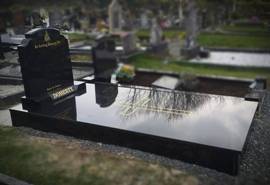
Granite Tombstone


Chess: "Blue Print" "Arizona" "Cheetah" "The Refrigerator" "Colonel Sanders" "Tombstone" "Yellow" "Seven" "El Niño"
So to speak : "Este versículo de Jueces, Judg.14:14, y este cuento de Jorge Luis Borges contienen la claVE para VER que Sansón (Samson) es el la encarnación de Egipto, más bien el Rey de Egipto, y que de esa Revelación (la que cifra el acertijo) nace Israel para "hacerte Hijo"..... o sea Samson es el "Rey de Reyes" como Rey de Egipto planeando la Evangelización a nivel planetario......recuérdese
la Partición de Osiris en 14 partes......…" (?)


The God's Script


The prison is deep and of stone; its form, that of a nearly perfect hemisphere, though the floor (also of stone) is somewhat less than a great circle, a fact which in some way aggravates the feelings of oppression and of vastness. A dividing wall cuts it at the center; this wall, although very high, does not reach the upper part of the vault; in one cell am I, Tzinacán, magician of the pyramid of Qaholom, which Pedro de Alvarado devastated by fire; in the other there is a jaguar measuring with secret and even paces the time and space of captivity. A long window with bars, flush with the floor, cuts the central wall. At the shadowless hour [midday], a trap in the high ceiling opens and a jailer whom the years have gradually
been effacing maneuvers an iron sheave and lowers for us, at the end of a rope, jugs of water and chunks of flesh. The light breaks into the vault; at that instant I can see the
jaguar. I have lost count of the years I have lain in the darkness; I, who was young once and could move about this prison, am incapable of more than awaiting, in the posture of my death, the end destined to me by the gods. With the deep obsidian knife I have cut open the breasts of victims and now I could not, without magic, lift myself from the dust.
On the eve of the burning of the pyramid, the men who got down from the towering horses tortured me with fiery metals to force me to reveal the location of a hidden treasure. They struck down the idol of the god before my very eyes, but he did not abandon me and I endured the torments in silence. They scourged me, they broke and deformed me, and then I awoke in this prison from which I shall not emerge in mortal life.
Impelled by the fatality of having something to do, of populating time in some way, I tried, in my darkness, to recall all I knew. Endless nights I devoted to recalling the order and the number of stone-carved serpents or the precise form of a medicinal tree. Gradually, in this way, I subdued the passing years; gradually, in this way, I came into possession of that
which was already mine. One night I felt I was approaching the threshold of an intimate recollection; before he sights the sea, the traveller feels a quickening in the blood. Hours later I began to perceive the outline of the recollection. It was a tradition of the god. The god, foreseeing that at the end of time there would be devastation and ruin, wrote on the first day of Creation a magical sentence with the power to ward off those evils. He wrote it in such a way that it would reach the most distant generations and not be subject to chance. No one
knows where it was written nor with what characters, but it is certain that it exists, secretly, and that a chosen one shall read it. I considered that we were now, as always, at the end of time and that my destiny as the last priest of the god would give me access to the privilege of intuiting the script. The fact that a prison confined me did not forbid my hope; perhaps I had seen the script of Qaholom a thousand times and needed only to fathom it. This reflection encouraged me, and then instilled in me a kind of vertigo. Throughout the earth there are
ancient forms, forms incorruptible and eternal; any one of them could be the symbol I sought. A mountain could be the speech of the god, or a river or the empire or the
configuration of the stars. But in the process of the centuries the mountain is levelled and the river will change its course, empires experience mutation and havoc and the configuration of the stars varies. There is change in the firmament. The mountain and the star are individuals and individuals perish. I sought something more tenacious, more invulnerable. I thought of the generations of cereals, of grasses, of birds, of men.
Perhaps the magic would be written on my face, perhaps I myself was the end of my search. That anxiety was consuming me when I remembered the jaguar was one of the attributes of the god. Then my soul filled with pity. I imagined the first morning of time; I imagined my god confiding his message to the living skin of the jaguars, who would love and reproduce without end, in caverns, in cane fields, on islands, in order that the last men might receive it. I imagined that net of tigers, that teeming labyrinth of tigers, inflicting horror upon pastures and flocks in order to perpetuate a design. In the next cell there was a jaguar; in his vicinity I perceived a confirmation of my conjecture and a secret favor.
I devoted long years to learning the order and the configuration of the spots. Each period of darkness conceded an instant of light, and I was able thus to fix in my mind the black forms running through the yellow fur. Some of them included points, others formed cross lines
on the inner side of the legs; others, ring-shaped, were repeated. Perhaps they were a single sound or a single word. Many of them had red edges.
I shall not recite the hardships of my toil. More than once I cried out to the vault that it was impossible to decipher that text. Gradually, the concrete enigma I labored at disturbed me less than the generic enigma of a sentence written by a god. What type of sentence (I asked
myself) will an absolute mind construct? I considered that even in the human languages there is no proposition that does not imply the entire universe; to say the tiger is to
say the tigers that begot it, the deer and turtles devoured
by it, the grass on which the deer fed, the earth that was
mother to the grass, the heaven that gave birth to the
earth. I considered that in the language of a god every
word would enunciate that infinite concatenation of facts,
and not in an implicit but in an explicit manner, and not
progressively but instantaneously. In time, the notion of a
divine sentence seemed puerile or blasphemous. A god, I
reflected, ought to utter only a single word and in that
word absolute fullness. No word uttered by him can be
inferior to the universe or less than the sum total of time.
Shadows or simulacra of that single word equivalent to a
language and to all a language can embrace are the poor
and ambitious human words, all, world, universe.
One day or one night -- what difference between
my days and nights can there be? -- I dreamt there was a
grain of sand on the floor of the prison. Indifferent, I slept
again; I dreamt I awoke and that on the floor there were
two grains of sand. I slept again; I dreamt that the grains
of sand were three. They went on multiplying in this way
until they filled the prison and I lay dying beneath that
hemisphere of sand. I realized that I was dreaming; with a
vast effort I roused myself and awoke. It was useless to
awake; the innumerable sand was suffocating me.
Someone said to me: You have not awakened to
wakefulness, but to a previous dream. This dream is
enclosed within another, and so on to infinity, which is
the number of grains of sand. The path you must retrace
is interminable and you will die before you ever really
awake.
I felt lost. The sand burst my mouth, but I
shouted: A sand of dreams cannot kill me nor are there
dreams within dreams. A blaze of light awoke me. In the
darkness above there grew a circle of light. I saw the face
and hands of the jailer, the sheave, the rope, the flesh and
the water jugs.
A man becomes confused, gradually, with the
form of his destiny; a man is, by and large, his
circumstances. More than a decipherer or an avenger,
more than a priest of the god, I was one imprisoned. From
the tireless labyrinth of dreams I returned as if to my
home to the harsh prison. I blessed its dampness, I
blessed its tiger, I blessed the crevice of light, I blessed
my old, suffering body, I blessed the darkness and the
stone.
Then there occurred what I cannot forget nor
communicate. There occurred the union with the divinity,
with the universe (I do not know whether these words
differ in meaning). Ecstasy does not repeat its symbols;
God has been seen in a blazing light, in a sword or in the
circles of a rose. I saw an exceedingly high Wheel, which
was not before my eyes, nor behind me, nor to the sides,
but every place at one time. That Wheel was made of
water, but also of fire, and it was (although the edge
could be seen) infinite. Interlinked, all things that are,
were and shall be formed it, and I was one of the fibers of
that total fabric and Pedro de Alvarado who tortured me
was another. There lay revealed the causes and the effects
and it sufficed me to see that Wheel in order to
understand it all, without end. O bliss of understanding,
greater than the bliss of imagining or feeling. I saw the
universe and I saw the intimate designs of the universe. I
saw the origins narrated in the Book of the Common. I
saw the mountains that rose out of the water, I saw the
first men of wood, the cisterns that turned against the
men, the dogs that ravaged their faces. I saw the faceless
god concealed behind the other gods. I saw infinite
processes that formed one single felicity and,
understanding all, I was able also to understand the script
of the tiger.
It is a formula of fourteen random words (they
appear random) and to utter it in a loud voice would
suffice to make me all powerful. To say it would suffice
to abolish this stone prison, to have daylight break into
my night, to be young, to be immortal, to have the tiger's
jaws crush Alvarado, to sink the sacred knife into the
breasts of Spaniards, to reconstruct the pyramid, to
reconstruct the empire. Forty syllables, fourteen words,
and I, Tzinacán, would rule the lands Moctezuma ruled.
But I know I shall never say those words, because I no
longer remember Tzinacán.
May the mystery lettered on the tigers die with
me. Whoever has seen the universe, whoever has beheld
the fiery designs of the universe, cannot think in terms of
one man, of that man's trivial fortunes or misfortunes,
though he be that very man. That man has been he and
now matters no more to him. What is the life of that other
to him, the nation of that other to him, if he, now, is no
one. This is why I do not pronounce the formula, why,
lying here in the darkness, I let the days obliterate me.


Translated by L. A. Murillo

LA ESCRITURA DEL DIOS


La cárcel es profunda y de piedra; su forma, la de un hemisferio
casi perfecto, si bien el piso (que también es de piedra) es algo
menor que un círculo máximo, hecho que agrava de algún modo
los sentimientos de opresión y de vastedad. Un muro medianero
la corta; éste, aunque altísimo, no toca la parte superior de la
bóveda; de un lado estoy' yo, Tzinacán, mago de la pirámide
de Qaholom, que Pedro.de Alvarado incendió; del otro hay un
jaguar, que mide con secretos pasos iguales el tiempo y el espacio
del cautiverio. A ras del suelo, una larga ventana con
barretes corta el muro central. En la hora sin sombra [el mediodía],
se abre una trampa en lo alto y un carcelero que han ido
borrando los años maniobra una roldana de hierro, y nos baja,
en la punta de un cordel, cántaros con agua y trozos de carne.
La luz entra en la bóveda; en ese instante puedo ver al jaguar.
He perdido la cifra de, los años que yazgo en la tiniebla; yo,
que alguna vez era joven y podía caminar por esta prisión, no
hago otra cosa que aguardar, en la postura de mi muerte, el fin
que me destinan los dioses. Con el hondo cuchillo "de pedernal
he abierto el pecho de las víctimas y ahora no podría, sin magia,
levantarme del polvo.
La víspera del incendio de la Pirámide, los hombres que bajaron
de altos caballos me castigaron con metales ardientes para
que revelara el lugar de un tesoro escondido. Abatieron, delante
de mis ojos, el ídolo del dios, pero éste no me abandonó y me
mantuve silencioso entre los tormentos. Me laceraron, me rompieron,
me deformaron y luego desperté en esta cárcel, que ya
no dejaré en mi vida mortal.
Urgido por la fatalidad de hacer algo, de poblar de algún
modo el tiempo, quise recordar, en mi sombra, todo lo que sabía.
Noches enteras malgasté en recordar el orden y el número de
unas sierpes de piedra o la forma de un árbol medicinal. Así
fui debelando los años, así fui entrando en posesión de lo que
ya era mío. Una noche sentí que me acercaba a un recuerdo
preciso; antes de ver el mar, el viajero siente Una agitación en
la sangre. Horas después, empecé a avistar él recuerdo; era una
de las tradiciones del dios. Éste, previendo que en el fin de los
tiempos ocurrirían muchas desventuras y ruinas, escribió el primer
día de la Creación una sentencia mágica, apta para conjurar
esos males. La escribió de manera que llegara a las más
apartadas generaciones y que no la tocara el azar. Nadie sabe en
qué punto la escribió ni con qué caracteres, pero nos consta
que perdura, secreta, y que la leerá uri elegido. Consideré que
estábamos, como siempre, en el fin de los tiempos y que mi
destino de último sacerdote del dios me daría acceso al privilegio
de intuir esa escritura. El hecho de que me rodeara una
cárcel no me vedaba esa esperanza; acaso yo había visto miles
de veces la inscripción de Qaholom y sólo me faltaba entenderla.
Esta reflexión me animó y luego me infundió una especie
de vértigo. En el ámbito de la tierra hay formas antiguas, formas
incorruptibles y eternas; cualquiera de ellas podía ser el símbolo
buscado. Una montaña podía ser la palabra del dios, o un
río o el imperio o la configuración de los astros. Pero en el curso
de los siglos las montañas se allanan y el camino de un río
suele desviarse y los imperios conocen mutaciones y estragos y la
figura de los astros varía. En el firmamento hay mudanza. La
montaña y la estrella son individuos y los individuos caducan.
Busqué algo más tenaz, más invulnerable. Pensé en las generaciones
de los cereales, de los pastos, de los pájaros, de los hombres.
Quizá en mi cara estuviera escrita la magia, quizá yo mismo
fuera el fin de mi busca. En ese afán estaba cuando recordé que
el jaguar era uno de los atributos del dios.
Entonces mi alma se llenó de piedad. Imaginé la primera mañana
del tiempo, imaginé a mi dios confiando el mensaje a la
piel viva de los jaguares, que se amarían y se engendrarían sin
fin, en cavernas, en cañaverales, en islas, para que los últimos
hombres lo recibieran. Imaginé esa red de tigres, ese caliente
laberinto de tigres, dando horror a los prados y a los rebaños
para conservar un dibujo. En la otra celda había un jaguar;
en su vecindad percibí una confirmación de mi conjetura y un
secreto favor.
Dediqué largos años a aprender el orden y la configuración
de las manchas. Cada ciega jornada me concedía un instante de
luz, y así pude fijar en la mente las negras formas que tachaban
el pelaje amarillo. Algunas incluían puntos; otras formaban rayas
trasversales en la cara interior de las piernas; otras, anulares, se
repetían. Acaso eran un mismo sonido o una misma palabra.
Muchas tenían bordes rojos.
No diré las fatigas de mi labor. Más de una vez grité a la
bóveda que era imposible descifrar aquel texto. Gradualmente,
el enigma concreto que me atareaba me inquietó menos que el
enigma genérico de una sentencia escrita por un dios. ¿Qué tipo
de sentencia (me pregunté) construirá una mente absoluta?
Consideré que aun en los lenguajes humanos no hay proposición
que no implique el universo entero; decir el tigre es decir los
tigres que lo engendraron, los ciervos y tortugas que devoró, el
pasto de que se alimentaron los ciervos, la tierra que fue madre
del pasto, el cielo que dio luz a la tierra. Consideré que en el
lenguaje de un dios toda palabra enunciaría esa infinita concatenación
de los hechos, y no de un modo implícito, sino explícito,
y no de un modo progresivo, sino inmediato. Con el tiempo,
la noción de una sentencia divina parecióme pueril o blasfematoria.
Un dios, reflexioné, sólo debe decir una palabra y en
esa palabra la plenitud. Ninguna voz articulada por él puede
ser inferior al universo o menos que la suma del tiempo.. Sombras
o simulacros de esa voz que equivale a un lenguaje y a
cuanto puede comprender un lenguaje son las ambiciosas y pobres
voces humanas, todo, mundo, universo.
Un día o una noche —entre mis días y mis noches, ¿qué diferencia
cabe?— soñé que en el piso de la cárcel había un grano
de arena. Volví a dormir, indiferente; soñé que despertaba y
que había dos granos de. arena. Volví a dormir; soñé que los
granos de arena eran tres. Fueron, así, multiplicándose hasta
colmar la cárcel y yo moría bajo ese hemisferio de arena. Comprendí
que estaba soñando; con un vasto esfuerzo me desperté.
El despertar fue inútil; la innumerable arena me sofocaba. Alguien
me dijo: No has despertado a la vigilia, sino a\ un sueño
anterior. Ese sueño está dentro de otro, y asi hasta lo infinito,
que es el número de los granos de arena. El camino que habrás
de desandar es ^interminable y morirás antes de haber despertado
realmente.
Me sentí perdido. La arena me rompía la boca, pero grité:
Ni una arena soñada puede matarme ni hay sueños qu)e estén
dentro de sueños. Un resplandor me despertó. En la tiniebla
superior se cernía un círculo de luz. Vi la cara y las manos del
carcelero, la roldana, el cordel, la carne y los cántaros.
Un hombre se confunde, gradualmente, con la forma de su
destino; un hombre es, a la larga, sus circunstancias. Más que
un descifrador o un vengador, más que un sacerdote del dios,
yo era un encarcelado. Del incansable laberinto de sueños yo
regresé como a mi casa a la dura prisión. Bendije su humedad,
bendije su tigre, bendije el agujero de luz, bendije mi viejo
cuerpo doliente, bendije la tiniebla y la piedra.
Entonces ocurrió lo que no puedo olvidar ni comunicar.
Ocurrió la unión con la divinidad, con el universo (no sé si
estas palabras difieren). El éxtasis no repite sus símbolos; hay
quien ha visto a Dios en un resplandor, hay quien lo ha percibido
en una espada o en los círculos de una rosa. Yo vi una Rueda
altísima, que no estaba delante de mis ojos, ni detrás, ni a los
lados, sino en todas partes, a un tiempo. Esa Rueda estaba hecha
de agua, pero también de fuego, y era (aunque se veía el borde)
infinita: Entretejidas, la formaban todas las cosas que serán, que
son y que fueron, y yo era una de las hebras de esa trama total,
y Pedro de Alvarado, que me dio tormento, era otra. Ahí estaban
las causas y los efectos y me bastaba ver esa Rueda para entenderlo
todo, sin fin. ¡Oh dicha de entender, mayor que la de
imaginar o la de sentir! Vi el universo y vi los íntimos designios
del universo. Vi los orígenes que narra el Libro del Común.
Vi las montañas que surgieron del agua, vi los primeros hombres
de palo, vi las tinajas que se volvieron contra los hombres,
vi los perros que les destrocaron las caras. Vi el dios sin cara
que hay detrás de los dioses. Vi infinitos procesos que formaban
una sola felicidad y, entendiéndolo todo, alcancé también a
entender la escritura del tigre.
Es una fórmula de catorce palabras casuales (que parecen
casuales) y me bastaría decirla en voz alta para ser todopoderoso.
Me bastaría decirla para abolir esta cárcel de piedra, para que
el día entrara en mi noche, para ser joven, para ser inmortal,
para que el tigre destrozara a Alvarado, para sumir el santo
cuchillo en pechos españoles, para reconstruir la pirámide, para
reconstruir el imperio. Cuarenta sílabas, catorce palabras, y yo,
Tzinacán, regiría las tierras que rigió Moctezuma. Pero yo sé
que nunca diré esas palabras, porque ya no me acuerdo de
Tzinacán.
Que muera conmigo el misterio que está escrito en los tigres.
Quien ha entrevisto el universo, quien ha entrevisto los ardientes
designios del universo, no puede pensar en un hombre, en sus
triviales dichas o desventuras, aunque ese hombre sea él. Ese
hombre ha sido él y ahora no le importa. Qué le importa la
suerte de aquel otro, qué le importa la nación de aquel otro,
si él, ahora es nadie. Por eso no pronuncio la fórmula, por eso
dejo que me olviden los días, acostado en la oscuridad.
A Ema Risso Platero.
El mito de Sans... See Moreón cifra el Poder Real en Egipto

Cuando hablamos de el mito de Adán y Eva, el mito Sansón, etc. no estamos restándole el valor trascendental de Verdadera Revelación que tiene la Biblia, al contrario le estamos confiriendo su verdadera Potencia para trasladarnos a un plano superior de Consciencia. La Biblia es irrefutable porque verdaderamente es un Libro inspirado por Dios para que lo leamos como Leones y nos elevemos hasta el Padre..... La Resurrección de Lázaro es cierta--no en el ámbito natural-- sino en el tanto y en cuanto puedas comprender el importe de lo que aquí se afirma : que Adán, Abraham, Sansón, Moisés son tipos de Egipto y que Egipto e Israel son dos aspectos dialécticos de una sola realidad.....y que sí a Egipto llegamos procedentes de Holanda---lo que ahora es Holanda---- je je je por Hola, anda!......Levántate y anda, Lázaro!!!.... he ahí La Roza y el Tul y el Pan .......je je je


La Biblia es un Contrato Trascendental y su carácter vinculante es inherente a su comprensión y al NOMBRE que se lea en Él..... No es obligatorio aceptar el Contrato, máxime si no se entiende lo ahí Escrito, pero su Poder en el Ámbito Humano es REAL e Insuperable.

Saturday, April 4, 2009

Stephen Crane

The Bride Comes to Yellow Sky

The great Pullman was whirling onward with such dignity of motion that a glance from the window seemed simply to prove that the plains of Texas were pouring eastward. Vast flats of green grass, dull-hued spaces of mesquite and cactus, little groups of frame houses, woods of light and tender trees, all were sweeping into the east, sweeping over the horizon, a precipice.
A newly married pair had boarded this coach at San Antonio. The man's face was reddened from many days in the wind and sun, and a direct result of his new black clothes was that his brick-colored hands were constantly performing in a most conscious fashion. From time to time he looked down respectfully at his attire. He sat with a hand on each knee, like a man waiting in a barber's shop. The glances he devoted to other passengers were furtive and shy.
The bride was not pretty, nor was she very young. She wore a dress of blue cashmere, with small reservations of velvet here and there and with steel buttons abounding. She continually twisted her head to regard her puff sleeves, very stiff, straight, and high. They embarrassed her. It was quite apparent that she had cooked, and that she expected to cook, dutifully. The blushes caused by the careless scrutiny of some passengers as she had entered the car were strange to see upon this plain, under-class countenance, which was drawn in placid, almost emotionless lines.
They were evidently very happy. "Ever been in a parlor-car before?" he asked, smiling with delight.
"No," she answered, "I never was. It's fine, ain't it?"
"Great! And then after a while we'll go forward to the diner and get a big layout. Finest meal in the world. Charge a dollar."
"Oh, do they?" cried the bride. "Charge a dollar? Why, that's too much - for us - ain't it, Jack?"
"Not this trip, anyhow," he answered bravely. "We're going to go the whole thing."
Later, he explained to her about the trains. "You see, it's a thousand miles from one end of Texas to the other, and this train runs right across it and never stops but four times." He had the pride of an owner. He pointed out to her the dazzling fittings of the coach, and in truth her eyes opened wider as she contemplated the sea-green figured velvet, the shining brass, silver, and glass, the wood that gleamed as darkly brilliant as the surface of a pool of oil. At one end a bronze figure sturdily held a support for a separated chamber, and at convenient places on the ceiling were frescoes in olive and silver.

< 2 >

To the minds of the pair, their surroundings reflected the glory of their marriage that morning in San Antonio. This was the environment of their new estate, and the man's face in particular beamed with an elation that made him appear ridiculous to the negro porter. This individual at times surveyed them from afar with an amused and superior grin. On other occasions he bullied them with skill in ways that did not make it exactly plain to them that they were being bullied. He subtly used all the manners of the most unconquerable kind of snobbery. He oppressed them, but of this oppression they had small knowledge, and they speedily forgot that infrequently a number of travelers covered them with stares of derisive enjoyment. Historically there was supposed to be something infinitely humorous in their situation.
"We are due in Yellow Sky at 3:42," he said, looking tenderly into her eyes.
"Oh, are we?" she said, as if she had not been aware of it. To evince surprise at her husband's statement was part of her wifely amiability. She took from a pocket a little silver watch, and as she held it before her and stared at it with a frown of attention, the new husband's face shone.
"I bought it in San Anton' from a friend of mine," he told her gleefully.
"It's seventeen minutes past twelve," she said, looking up at him with a kind of shy and clumsy coquetry. A passenger, noting this play, grew excessively sardonic, and winked at himself in one of the numerous mirrors.
At last they went to the dining-car. Two rows of negro waiters, in glowing white suits, surveyed their entrance with the interest and also the equanimity of men who had been forewarned. The pair fell to the lot of a waiter who happened to feel pleasure in steering them through their meal. He viewed them with the manner of a fatherly pilot, his countenance radiant with benevolence. The patronage, entwined with the ordinary deference, was not plain to them. And yet, as they returned to their coach, they showed in their faces a sense of escape.
To the left, miles down a long purple slope, was a little ribbon of mist where moved the keening Rio Grande. The train was approaching it at an angle, and the apex was Yellow Sky. Presently it was apparent that, as the distance from Yellow Sky grew shorter, the husband became commensurately restless. His brick-red hands were more insistent in their prominence. Occasionally he was even rather absent-minded and far-away when the bride leaned forward and addressed him.

< 3 >

As a matter of truth, Jack Potter was beginning to find the shadow of a deed weigh upon him like a leaden slab. He, the town marshal of Yellow Sky, a man known, liked, and feared in his corner, a prominent person, had gone to San Antonio to meet a girl he believed he loved, and there, after the usual prayers, had actually induced her to marry him, without consulting Yellow Sky for any part of the transaction. He was now bringing his bride before an innocent and unsuspecting community.
Of course, people in Yellow Sky married as it pleased them, in accordance with a general custom; but such was Potter's thought of his duty to his friends, or of their idea of his duty, or of an unspoken form which does not control men in these matters, that he felt he was heinous. He had committed an extraordinary crime. Face to face with this girl in San Antonio, and spurred by his sharp impulse, he had gone headlong over all the social hedges. At San Antonio he was like a man hidden in the dark. A knife to sever any friendly duty, any form, was easy to his hand in that remote city. But the hour of Yellow Sky, the hour of daylight, was approaching.
He knew full well that his marriage was an important thing to his town. It could only be exceeded by the burning of the new hotel. His friends could not forgive him. Frequently he had reflected on the advisability of telling them by telegraph, but a new cowardice had been upon him. He feared to do it. And now the train was hurrying him toward a scene of amazement, glee, and reproach. He glanced out of the window at the line of haze swinging slowly in towards the train.
Yellow Sky had a kind of brass band, which played painfully, to the delight of the populace. He laughed without heart as he thought of it. If the citizens could dream of his prospective arrival with his bride, they would parade the band at the station and escort them, amid cheers and laughing congratulations, to his adobe home.
He resolved that he would use all the devices of speed and plains-craft in making the journey from the station to his house. Once within that safe citadel he could issue some sort of a vocal bulletin, and then not go among the citizens until they had time to wear off a little of their enthusiasm.

< 4 >

The bride looked anxiously at him. "What's worrying you, Jack?"
He laughed again. "I'm not worrying, girl. I'm only thinking of Yellow Sky."
She flushed in comprehension.
A sense of mutual guilt invaded their minds and developed a finer tenderness. They looked at each other with eyes softly aglow. But Potter often laughed the same nervous laugh. The flush upon the bride's face seemed quite permanent.
The traitor to the feelings of Yellow Sky narrowly watched the speeding landscape. "We're nearly there," he said.
Presently the porter came and announced the proximity of Potter's home. He held a brush in his hand and, with all his airy superiority gone, he brushed Potter's new clothes as the latter slowly turned this way and that way. Potter fumbled out a coin and gave it to the porter, as he had seen others do. It was a heavy and muscle-bound business, as that of a man shoeing his first horse.
The porter took their bag, and as the train began to slow they moved forward to the hooded platform of the car. Presently the two engines and their long string of coaches rushed into the station of Yellow Sky.
"They have to take water here," said Potter, from a constricted throat and in mournful cadence, as one announcing death. Before the train stopped, his eye had swept the length of the platform, and he was glad and astonished to see there was none upon it but the station-agent, who, with a slightly hurried and anxious air, was walking toward the water-tanks. When the train had halted, the porter alighted first and placed in position a little temporary step.
"Come on, girl," said Potter hoarsely. As he helped her down they each laughed on a false note. He took the bag from the negro, and bade his wife cling to his arm. As they slunk rapidly away, his hang-dog glance perceived that they were unloading the two trunks, and also that the station-agent far ahead near the baggage-car had turned and was running toward him, making gestures. He laughed, and groaned as he laughed, when he noted the first effect of his marital bliss upon Yellow Sky. He gripped his wife's arm firmly to his side, and they fled. Behind them the porter stood chuckling fatuously.

II

The California Express on the Southern Railway was due at Yellow Sky in twenty-one minutes. There were six men at the bar of the "Weary Gentleman" saloon. One was a drummer who talked a great deal and rapidly; three were Texans who did not care to talk at that time; and two were Mexican sheep-herders who did not talk as a general practice in the "Weary Gentleman" saloon. The barkeeper's dog lay on the board walk that crossed in front of the door. His head was on his paws, and he glanced drowsily here and there with the constant vigilance of a dog that is kicked on occasion. Across the sandy street were some vivid green grass plots, so wonderful in appearance amid the sands that burned near them in a blazing sun that they caused a doubt in the mind. They exactly resembled the grass mats used to represent lawns on the stage. At the cooler end of the railway station a man without a coat sat in a tilted chair and smoked his pipe. The fresh-cut bank of the Rio Grande circled near the town, and there could be seen beyond it a great, plum-colored plain of mesquite.

< 5 >

Save for the busy drummer and his companions in the saloon, Yellow Sky was dozing. The new-comer leaned gracefully upon the bar, and recited many tales with the confidence of a bard who has come upon a new field.
" -- and at the moment that the old man fell down stairs with the bureau in his arms, the old woman was coming up with two scuttles of coal, and, of course -- "
The drummer's tale was interrupted by a young man who suddenly appeared in the open door. He cried: "Scratchy Wilson's drunk, and has turned loose with both hands." The two Mexicans at once set down their glasses and faded out of the rear entrance of the saloon.
The drummer, innocent and jocular, answered: "All right, old man. S'pose he has. Come in and have a drink, anyhow."
But the information had made such an obvious cleft in every skull in the room that the drummer was obliged to see its importance. All had become instantly solemn. "Say," said he, mystified, "what is this?" His three companions made the introductory gesture of eloquent speech, but the young man at the door forestalled them.
"It means, my friend," he answered, as he came into the saloon, "that for the next two hours this town won't be a health resort."
The barkeeper went to the door and locked and barred it. Reaching out of the window, he pulled in heavy wooden shutters and barred them. Immediately a solemn, chapel-like gloom was upon the place. The drummer was looking from one to another.
"But, say," he cried, "what is this, anyhow? You don't mean there is going to be a gun-fight?"
"Don't know whether there'll be a fight or not," answered one man grimly. "But there'll be some shootin' - some good shootin'."
The young man who had warned them waved his hand. "Oh, there'll be a fight fast enough if anyone wants it. Anybody can get a fight out there in the street. There's a fight just waiting."
The drummer seemed to be swayed between the interest of a foreigner and a perception of personal danger.
"What did you say his name was?" he asked.
"Scratchy Wilson," they answered in chorus.
"And will he kill anybody? What are you going to do? Does this happen often? Does he rampage around like this once a week or so? Can he break in that door?"

< 6 >

"No, he can't break down that door," replied the barkeeper. "He's tried it three times. But when he comes you'd better lay down on the floor, stranger. He's dead sure to shoot at it, and a bullet may come through."
Thereafter the drummer kept a strict eye upon the door. The time had not yet been called for him to hug the floor, but, as a minor precaution, he sidled near to the wall. "Will he kill anybody?" he said again.
The men laughed low and scornfully at the question.
"He's out to shoot, and he's out for trouble. Don't see any good in experimentin' with him."
"But what do you do in a case like this? What do you do?"
A man responded: "Why, he and Jack Potter -- "
"But," in chorus, the other men interrupted, "Jack Potter's in San Anton'."
"Well, who is he? What's he got to do with it?"
"Oh, he's the town marshal. He goes out and fights Scratchy when he gets on one of these tears."
"Wow," said the drummer, mopping his brow. "Nice job he's got."
The voices had toned away to mere whisperings. The drummer wished to ask further questions which were born of an increasing anxiety and bewilderment; but when he attempted them, the men merely looked at him in irritation and motioned him to remain silent. A tense waiting hush was upon them. In the deep shadows of the room their eyes shone as they listened for sounds from the street. One man made three gestures at the barkeeper, and the latter, moving like a ghost, handed him a glass and a bottle. The man poured a full glass of whisky, and set down the bottle noiselessly. He gulped the whisky in a swallow, and turned again toward the door in immovable silence. The drummer saw that the barkeeper, without a sound, had taken a Winchester from beneath the bar. Later he saw this individual beckoning to him, so he tiptoed across the room.
"You better come with me back of the bar."
"No, thanks," said the drummer, perspiring. "I'd rather be where I can make a break for the back door."
Whereupon the man of bottles made a kindly but peremptory gesture. The drummer obeyed it, and finding himself seated on a box with his head below the level of the bar, balm was laid upon his soul at sight of various zinc and copper fittings that bore a resemblance to armor-plate. The barkeeper took a seat comfortably upon an adjacent box.

< 7 >

"You see," he whispered, "this here Scratchy Wilson is a wonder with a gun - a perfect wonder - and when he goes on the war trail, we hunt our holes - naturally. He's about the last one of the old gang that used to hang out along the river here. He's a terror when he's drunk. When he's sober he's all right - kind of simple - wouldn't hurt a fly - nicest fellow in town. But when he's drunk - whoo!"
There were periods of stillness. "I wish Jack Potter was back from San Anton'," said the barkeeper. "He shot Wilson up once - in the leg - and he would sail in and pull out the kinks in this thing."
Presently they heard from a distance the sound of a shot, followed by three wild yowls. It instantly removed a bond from the men in the darkened saloon. There was a shuffling of feet. They looked at each other. "Here he comes," they said.

III

A man in a maroon-colored flannel shirt, which had been purchased for purposes of decoration and made, principally, by some Jewish women on the east side of New York, rounded a corner and walked into the middle of the main street of Yellow Sky. In either hand the man held a long, heavy, blue-black revolver. Often he yelled, and these cries rang through a semblance of a deserted village, shrilly flying over the roofs in a volume that seemed to have no relation to the ordinary vocal strength of a man. It was as if the surrounding stillness formed the arch of a tomb over him. These cries of ferocious challenge rang against walls of silence. And his boots had red tops with gilded imprints, of the kind beloved in winter by little sledding boys on the hillsides of New England.
The man's face flamed in a rage begot of whisky. His eyes, rolling and yet keen for ambush, hunted the still doorways and windows. He walked with the creeping movement of the midnight cat. As it occurred to him, he roared menacing information. The long revolvers in his hands were as easy as straws; they were moved with an electric swiftness. The little fingers of each hand played sometimes in a musician's way. Plain from the low collar of the shirt, the cords of his neck straightened and sank, straightened and sank, as passion moved him. The only sounds were his terrible invitations. The calm adobes preserved their demeanor at the passing of this small thing in the middle of the street.

< 8 >

There was no offer of fight; no offer of fight. The man called to the sky. There were no attractions. He bellowed and fumed and swayed his revolvers here and everywhere.
The dog of the barkeeper of the "Weary Gentleman" saloon had not appreciated the advance of events. He yet lay dozing in front of his master's door. At sight of the dog, the man paused and raised his revolver humorously. At sight of the man, the dog sprang up and walked diagonally away, with a sullen head, and growling. The man yelled, and the dog broke into a gallop. As it was about to enter an alley, there was a loud noise, a whistling, and something spat the ground directly before it. The dog screamed, and, wheeling in terror, galloped headlong in a new direction. Again there was a noise, a whistling, and sand was kicked viciously before it. Fear-stricken, the dog turned and flurried like an animal in a pen. The man stood laughing, his weapons at his hips.
Ultimately the man was attracted by the closed door of the "Weary Gentleman" saloon. He went to it, and hammering with a revolver, demanded drink.
The door remaining imperturbable, he picked a bit of paper from the walk and nailed it to the framework with a knife. He then turned his back contemptuously upon this popular resort, and walking to the opposite side of the street, and spinning there on his heel quickly and lithely, fired at the bit of paper. He missed it by a half inch. He swore at himself, and went away. Later, he comfortably fusilladed the windows of his most intimate friend. The man was playing with this town. It was a toy for him.
But still there was no offer of fight. The name of Jack Potter, his ancient antagonist, entered his mind, and he concluded that it would be a glad thing if he should go to Potter's house and by bombardment induce him to come out and fight. He moved in the direction of his desire, chanting Apache scalp-music.
When he arrived at it, Potter's house presented the same still front as had the other adobes. Taking up a strategic position, the man howled a challenge. But this house regarded him as might a great stone god. It gave no sign. After a decent wait, the man howled further challenges, mingling with them wonderful epithets.

< 9 >

Presently there came the spectacle of a man churning himself into deepest rage over the immobility of a house. He fumed at it as the winter wind attacks a prairie cabin in the North. To the distance there should have gone the sound of a tumult like the fighting of 200 Mexicans. As necessity bade him, he paused for breath or to reload his revolvers.

IV

Potter and his bride walked sheepishly and with speed. Sometimes they laughed together shamefacedly and low.
"Next corner, dear," he said finally.
They put forth the efforts of a pair walking bowed against a strong wind. Potter was about to raise a finger to point the first appearance of the new home when, as they circled the corner, they came face to face with a man in a maroon-colored shirt who was feverishly pushing cartridges into a large revolver. Upon the instant the man dropped his revolver to the ground, and, like lightning, whipped another from its holster. The second weapon was aimed at the bridegroom's chest.
There was silence. Potter's mouth seemed to be merely a grave for his tongue. He exhibited an instinct to at once loosen his arm from the woman's grip, and he dropped the bag to the sand. As for the bride, her face had gone as yellow as old cloth. She was a slave to hideous rites gazing at the apparitional snake.
The two men faced each other at a distance of three paces. He of the revolver smiled with a new and quiet ferocity.
"Tried to sneak up on me," he said. "Tried to sneak up on me!" His eyes grew more baleful. As Potter made a slight movement, the man thrust his revolver venomously forward. "No, don't you do it, Jack Potter. Don't you move a finger toward a gun just yet. Don't you move an eyelash. The time has come for me to settle with you, and I'm goin' to do it my own way and loaf along with no interferin'. So if you don't want a gun bent on you, just mind what I tell you."
Potter looked at his enemy. "I ain't got a gun on me, Scratchy," he said. "Honest, I ain't." He was stiffening and steadying, but yet somewhere at the back of his mind a vision of the Pullman floated, the sea-green figured velvet, the shining brass, silver, and glass, the wood that gleamed as darkly brilliant as the surface of a pool of oil - all the glory of the marriage, the environment of the new estate. "You know I fight when it comes to fighting, Scratchy Wilson, but I ain't got a gun on me. You'll have to do all the shootin' yourself."

< 10 >

His enemy's face went livid. He stepped forward and lashed his weapon to and fro before Potter's chest. "Don't you tell me you ain't got no gun on you, you whelp. Don't tell me no lie like that. There ain't a man in Texas ever seen you without no gun. Don't take me for no kid." His eyes blazed with light, and his throat worked like a pump.
"I ain't takin' you for no kid," answered Potter. His heels had not moved an inch backward. "I'm takin' you for a damn fool. I tell you I ain't got a gun, and I ain't. If you're goin' to shoot me up, you better begin now. You'll never get a chance like this again."
So much enforced reasoning had told on Wilson's rage. He was calmer. "If you ain't got a gun, why ain't you got a gun?" he sneered. "Been to Sunday-school?"
"I ain't got a gun because I've just come from San Anton' with my wife. I'm married," said Potter. "And if I'd thought there was going to be any galoots like you prowling around when I brought my wife home, I'd had a gun, and don't you forget it."
"Married!" said Scratchy, not at all comprehending.
"Yes, married. I'm married," said Potter distinctly.
"Married?" said Scratchy. Seemingly for the first time he saw the drooping, drowning woman at the other man's side. "No!" he said. He was like a creature allowed a glimpse of another world. He moved a pace backward, and his arm with the revolver dropped to his side. "Is this the lady?" he asked.
"Yes, this is the lady," answered Potter.
There was another period of silence.
"Well," said Wilson at last, slowly, "I s'pose it's all off now."
"It's all off if you say so, Scratchy. You know I didn't make the trouble." Potter lifted his valise.
"Well, I 'low it's off, Jack," said Wilson. He was looking at the ground. "Married!" He was not a student of chivalry; it was merely that in the presence of this foreign condition he was a simple child of the earlier plains. He picked up his starboard revolver, and placing both weapons in their holsters, he went away. His feet made funnel-shaped tracks in the heavy sand.

The Bride Comes to Yellow Sky

Author Stephen Crane (1871–1900)

Classification Western parody

Fiction F

First Published 1898

Locale Yellow Sky, Texas

Time of Plot c. 1900

Principal characters:

JACK POTTER, the marshal in Yellow Sky

JACK’S WIFE

SCRATCHY WILSON, the last surviving member of a gang of outlaws

A "DRUMMER" (salesman) from the East

The Story

"The Bride Comes to Yellow Sky" concerns the efforts of a town marshal bringing his new bride to the "frontier" town of Yellow Sky Texas, at a time when the Old West is being slowly but inevitably civilized. At the climax of the story, the stereotypical and seemingly inevitable gunfight, a staple feature of Westerns, is averted, and the reader senses that all such gunplay is a thing of the past, that in fact Crane is describing the "end of an era."

Crane’s four-part story concerns man’s interaction with his environment. (Jack’s wife is not an individualized person with a name; she is important only because she represents marriage as a civilized institution.) In part 1, Crane describes the progress of the "great Pullman" train across Texas. With its luxurious appointments ("the dazzling fittings of the coach"), the train is a foreign country to the newlyweds, whom Crane portrays as self-conscious aliens: Jack’s hands "perform" in a "most conscious fashion," and his bride is "embarrassed" by her puff sleeves. The couple are so self-conscious and intimidated by their surroundings that the black porter "bullies" them, regards them with "an amused and superior grin," and generally "oppresses" them, treatment that they also receive from the black waiter, who "patronizes them." As the train nears Yellow Sky, Jack becomes "commensurately restless," primarily because he knows that he has committed an "extraordinary crime" by going "headlong over all the social hedges" and ignoring his "duty to his friends," members of an "innocent and unsuspecting community." Marshals in frontier towns apparently do not marry because they need to be free of domestic entanglements. Because Jack and his bride sense their "mutual guilt," they "slink" away from the train station and walk rapidly to his home, a "safe citadel" from which Jack can later emerge to make his peace with the community.

While Jack and his bride make their way to his house, Crane cuts to the Weary Gentleman saloon, where six men, including the Eastern "drummer," sit drinking at the bar. While the drummer tells a story, another man appears at the door to announce that Scratchy Wilson is drunk and "has turned loose with both hands." The remainder of part 2 is exposition: The "innocent" drummer, whom Crane describes as a "foreigner," is told that there will be some shooting, that Scratchy and Jack are old adversaries, and that Scratchy is "the last one of the old gang that used to hang out along the river here."

Scratchy makes his appearance in part 3, which completes the preparation for the "show down," the anticipated gunfight of part 4. Scratchy issues unanswered challenges, shoots at a dog, and then approaches the saloon, where he demands a drink. When he is ignored, he uses the saloon door for target practice and then, remembering his traditional opponent, goes to Jack’s house and howls challenges and epithets at the empty house.

In part 4, Jack and his bride encounter Scratchy near Jack’s house. Scratchy gets the "drop" on Jack, accuses him of trying to sneak up on him, and warns him about trying to draw his gun. When Jack tells him that he has no gun, Scratchy is "livid" and tells him, "Don’t take me for no kid." Jack answers that he is not lying, but Scratchy presses him for a reason, suggesting that perhaps he has been to "Sunday-school." Jack’s response is to Scratchy almost as unlikely: "I’m married." Unable to deal with "this foreign condition." Scratchy supposes that "it’s all off now" and walks away.

Themes and Meanings

Crane’s frontier setting is essential to his theme, which concerns the conflict between the East and West and the passing of an era. While Yellow Sky is located in western Texas, it is accessible by train, which acts as a "vehicle" to bring Eastern civilization to the West. In fact, Yellow Sky has already been civilized, despite the anachronistic presence of Scratchy Wilson, who seems determined to preserve the "good old days." Unfortunately, Scratchy’s clothes reveal the extent to which even he has been "Easternized": He wears a "maroon-coloured flannel shirt" made by "some Jewish women on the East Side of New York," and his red-topped boots have gilded imprints beloved by "little sledding boys on the hillsides of New England."

At the end of the story Crane writes of Scratchy, "In the presence of this foreign condition he was a simple child of the earlier plains," thereby indicating that Scratchy is a "holdover," a man with ties to the Old West, but also that he is a "simple child." In the story Crane depicts Scratchy not as a mature adult, but as a child-man, an adult who refuses to "grow up." His boots are related to children, and he "plays" with the town, which is described as a "toy for him." When Jack tells him that he has no gun, Scratchy is concerned that he not be taken "for no kid," and Jack himself seems to understand the importance of being treated as an adult for he assures Scratchy, "I ain’t takin’ you for no kid." In fact, the confrontation between Jack and Scratchy resembles the "show downs" between young boys who cannot back down, but who have to assert their own lack of fear while simultaneously not provoking their opponent. In taking a bride, Jack has broken with the traditions of the Old West and also become a civilized man, one who has truly "put away childish things."

Just as marriage is a foreign condition to Scratchy, the last vestiges of the Old West are "foreign" to the drummer, who has apparently ignored the possibility that men like Scratchy might still exist. The drummer is "innocent" of the implications of Scratchy’s drinking, and his questions reveal not only his fear, but also his astonishment that someone might be killed in this "civilized" town. The townspeople strike the appropriate balance, however, for they accept Scratchy’s behavior as a remnant of the past, a worn-out ritual prompted by alcohol. Jack, who "goes out and fights Scratchy when he gets on one of these tears," is a part of this High Noon drama. By the end of the story, however, Jack has assumed a different role in a new ritual.

Style and Technique

Although Jack believes that he is guilty of a crime and has been a traitor to the community, he takes himself, as do many Crane protagonists, much too seriously. His perceptions of himself and his situation are not shared by the other characters or by Crane’s readers. The saloon conversation indicates that Jack is useful in containing Scratchy, but it does not reflect Jack’s centrality" in the community. (In fact, Jack’s decision to marry must have followed his subconscious awareness that it was "safe" to marry.)

The gap between perception and reality is apparent on the train: "To the minds of the pair, their surroundings reflected the glory of their marriage." The passengers and the black porter are not impressed, however, for they see the bride’s "under-class countenance," her "shy and clumsy coquetry," and the groom’s self-consciousness and lack of sophistication. To Jack, his house is his "citadel" and his marriage is his new "estate." The mock-heroic style is epitomized in the bride’s reaction to the meeting with Scratchy: "She was a slave to hideous rites, gazing at the apparitional snake." Crane elevates the meeting of Jack and his bride with Scratchy to myth: The "apparitional snake," the satanic force which introduces evil into the new Edenic estate, is the drunken Scratchy Wilson; Jack and his bride are the innocent Adam and Eve; the "rite" is the fall from grace. Surely, nothing could be further from reality.

In Crane’s fiction, insignificant man perceives himself as the center of the universe, but the universe seems indifferent to his posturings and pretensions. Scratchy, who had thought of his "ancient antagonist" ("ancient" is also mock-heroic), goes to Jack’s house. There he chants "Apache scalp music" and howls challenges, but Crane writes that the house "regarded him as might a great stone god." Man’s presumption is such that he believes he can disturb the "immobility of a house."

Part of the incongruity between man’s illusions and reality is reflected in the death imagery which pervades the story. Crane describes Jack "as one announcing death" and compares his mouth to a "grave for his tongue; as Scratchy walks the streets, the stillness forms the "arch of a tomb over him." Through the use of such figurative language, Crane builds his story to its anticlimactic scene. As Scratchy walks away, dragging his feet and making "funnel-shaped tracks," the new era arrives: "Yellow Sky," "the hour of daylight," as Crane defines it, replaces the twilight of the Old West.

Thomas L. Erskine

Author Biography

bombbanner.gif (13661 bytes)

Author: Stephen Crane
Introduction to Stephen Crane

The Life Of Stephen Crane

Stephen Crane was born in Newark, New Jersey, November 1, 1871, the youngest of fourteen children. His father, a Methodist pastor, died in 1880, and the family, after moving about several times, finally settled in Asbury Park, New Jersey, in 1882. In 1888 young Crane gained experience in reporting local events for his brother's news bureau and then later in the year went to Claverack College. After two years at Claverack, Crane went in 1890 to Lafayette College and in the spring of 1891 to Syracuse University, staying only one semester at each school, where his propensity for baseball seems to have outweighed his prowess as a student. It was while he was at Syracuse, however, that he composed the first draft of Maggie: A Girl of the Streets, a lengthier version of which he published under a nom de plume (and at his own expense) in 1893. In the summer of 1891 Crane made the closer acquaintance of the noted American writer Hamlin Garland (they had met before), from whom he received great encouragement (especially for the completed story later to be called The Red Badge of Courage). Then for over two years, the aspiring author plodded along doing journalistic work, trying all the time to place his manuscript of The Red Badge. Finally, in 1894, it appeared serially in the Philadelphia Press; the next year - in October - it was published in book form (appearing about two months later in a London edition). It was the book's generally enthusiastic reception by English readers which established Crane's reputation. Also appearing in 1895 was a volume of his verse, The Black Riders, to be followed by George's Mother and a new edition of Maggie: A Girl of the Streets in 1896.

From 1896 until his death in 1900 Crane kept a residence in England, though in 1896 he went as a correspondent for New York papers on a filibustering expedition to Cuba, on which, it is generally believed, he contracted the illness that was eventually to end his life. From his actual experience, however, he produced the fine story The Open Boat (published in 1898 in The Open Boat and Other Tales of Adventure). After Cuba, he traveled to Greece to report the Greco-Turkish war, and while there married Cora Taylor. In 1899 appeared another volume of poems, War Is Kind, as well as Active Service: A Novel and The Monster and Other Stories. In constant ill health all this while, Crane eventually traveled to the health spa at Badenweiler, Germany, where he met his death on June 5, 1900.

A number of his works were published after his death, and in 1925 - 7 appeared the monumental The Work of Stephen Crane, in twelve volumes edited by Wilson Follett. Since that time critical and scholarly interest in Crane has increased, until today he has achieved the status of a minor classic.

Works Other Than The Red Badge Of Courage

Crane wrote a number of war stories, of which The Red Badge is the supreme example, but he also achieved notable successes with his naturalistic stories of life in New York City (Bowery Tales), his Western stories, and his tales based on his experiences as a war reporter.

Bowery Tales

Crane's outstanding accomplishment in this vein is Maggie: A Girl of the Streets. It concerns the life of a young girl brought up in a "Hell's kitchen" in New York by alcoholic parents (the father dies early in the story; the mother becomes a notorious drunkard and jailbird). Poverty, ignorance, and a loveless family life in squalid surroundings absolutely condition Maggie to be the victim of the first man who offers a chance of release. He is Pete, a friend of her brother Jimmy, and she mistakes his blandishments (he is actually a gross, callous, and fatuous individual - the product of a similar upbringing) for love and loyalty. He "ruins" Maggie and deserts her for a more attractive woman. Her mother and brother (as well as the neighbors) in their ignorance assume an air of puritanical self-righteousness and spurn Maggie's attempt to return home. Her only alternative (as Crane presents it) is to become a streetwalker.

After some time, Maggie dies, and her remorseful family hold a wake during which they vacillate between emotion-filled recollections of a better time and Bowery mission cliches. The tale ends with the mother ironically acceding to the pleas of a mourning hypocrite to "forgive" her daughter.

Tales Of Adventure

Some critics regard The Open Boat as Crane's finest achievement. Based on an actual incident, the story involves four shipwrecked men in a lifeboat: the cook, the oiler, the correspondent (Crane), and the captain (who is injured). Such action as there is - mainly a simple record of their gradual approach to land, continually opposed and thwarted by the raging waves and by darkness - is simply a background for a prolonged ironic reflection on nature's indifference (it may even be hostility) to man. The ironic narrator also comments bitterly on the failure of romantic attitudinizing about war and danger by comfortably situated aesthetes to represent adequately the harsh reality of suffering or even the basic nobility of unaccommodated man. Even the outcome of the action is an ambiguous matter. Three of the men reach land safely, but the oiler has drowned and faces only the "sinister hospitality of the grave."

Stories Of The American West

The Bride Comes to Yellow Sky is easily the best of the Western stories. It opens with Jack Potter, the marshal of Yellow Sky, returning from San Antonio with his new bride. Not only does he display the traditional gaucheness of the newly married man, but he suffers a vague unrest at the thought of the reception they will receive in Yellow Sky; in some undefined way he has violated the frontier code. As the train pulls into town, the windows of the Weary Gentleman saloon are being boarded up, against the possible rampage of the town drunk and sometime badman Scratchy Wilson. The denizens of the saloon look to Jack Potter as their only salvation from Wilson. As Potter and his bride round a corner, they come face to face with Scratchy, who is nonplussed to discover that Potter is married and without a gun, and that a showdown is thus rendered impossible. Beneath the accidental fact of Potter's lack of a gun is the subtle realization by the two men that a border has been crossed - a way of life passed into history. The scene is one of Crane's most superb treatments of character involvement.