"And they answered and said unto him, Where, Lord? And he said unto them, Wheresoever the body is, thither will the eagles be gathered together."
Job 39:9
"Will the unicorn be willing to serve thee, or abide by thy crib?"
Burj al Arab
“Gil González reported
that, in this part of Central America (Nicoya?), all the carpenters’tools were
made of gold, but he too must have been mistaken, confusing copper for gold.
They passed through land where the rivers were alluvial and wound up their
journey at a place which they named San Vicente at the foot of the volcano
Chichontepec in the valley of Joboa. A little farther on, Gil González came
upon a local Maya lord named Nicoiano, whom he persuaded to accept baptism and
who, in consequence, gave him six gold figures of gods, each over a foot
high.”~~~Hugh Thomas: The Age of Gold. Ch.10 Pedrarias, Panama, and Peru;
Guzmán in New Spain p.122
"The fear of the LORD is clean, enduring for ever: the judgments of the LORD are true and righteous altogether."
La Dinastía de los Cafetaleros
Daniela Estrada, Colombia
"Its direct business is not to steel the soul against temptation"~~~John Henry Newman
Bar Refaeli
"When old Godolphin awoke it was to a wash of red sunset through the window"~~~Thomas Pynchon
The
gold represented a sacred metal and the passport for the afterlife.
Around the 10th century the Quimbaya culture disappeared entirely due to
unknown circumstances; studies of the archeological items point to an
advanced cultural development and the political structure of a cacicazgo
with separated groups dedicated to pottery, religion, trade, gold work
and war.
Quimbaya: vaso decorado con figura femenina
COLOMBIA GOLD
It is a MYSTERY still how this culture managed
the way to melt the gold to obtain the exact grade of gold and copper to
maintain a high purity, it is still unknown how such quality was
achieved since they would need kilns that would reach a thousand degrees
Celsius to melt these pieces One of the most famous activities of
the Quimbaya are the luxurious goldsmith works, which exhibits an
incredible beauty as well as a perfect technique. They developed
metallurgy systems to combine copper
with gold that was not abundant in their region (unlike other areas of
the country). This combination of gold and copper, called "tumbaga",
would not detract from the attractiveness, brightness and durability of
its magnificent pieces, of a spectacular vivacity. One of them, very
popular, is the famous poporos. His goldsmithing is one of the most
important in America given the exquisite beauty of the pieces expressed
by very well developed metallurgical methods.
Another of the mysteries of the Quimbaya Culture are the Quimbaya
artifacts, formerly called "Pájaros del Otún", since the former was
found near the banks of the Otún River in the province of Risaralda.
The Quimbaya inhabited the areas corresponding to the modern departments ofQuindío,CaldasandRisaraldainColombia, around the valley of theCauca River. There is no clear data about when they were initially established; the current best guess is around the 1st century BCE.
The Quimbaya people reached their zenith during the 4th to 7th century CE period known as The Quimbaya Classic. The culture's the most emblematic piece comes from this period, a form ofpoporoknown as thePoporo Quimbaya, on exhibit at theBogotá Gold Museum. The most frequent designs in the art pieces areanthropomorphic, depicting men and women sitting with closed eyes and placid expression, as well as many fruits and forms ofpoporos.
Most of the retrieved items are part of funeral offerings, found insidesarcophagimade of hollow trunks. The gold represented a sacred metal and the passport for theafterlife. Around the 10th century the Quimbaya culture disappeared entirely due to unknown circumstances; studies of the archeological items point to an advanced cultural development and the political structure of acacicazgowith separated groups dedicated to pottery, religion, trade, gold work and war.
"More to be desired are they than gold, yea, than much fine gold: sweeter also than honey and the honeycomb."
Matt.6:33
"But seek ye first the kingdom of God, and his righteousness; and all these things shall be added unto you."
"The arrival of a beggar on an island is accounted a sinistrous event."~~~Samuel Johnson
Titian: Paul III
"Diay sí! En un sentido político y significativo a uno solamente le bajan el piso si no anda volando alto!"~~~Pablo III
Stevenson
Trick or Treat!!!?
Functions The skeleton serves six major functions: support, movement,
protection, production of blood cells, storage of minerals and
endocrine regulation.
"The law of the LORD is perfect, converting the soul: the testimony of the LORD is sure, making wise the simple."
Antonio y San Antonio
Tales From the Ant World by Edward O.Wilson “Ants are the most warlike of all animals, with colony pitted against colony. Their clashes dwarf Waterloo and Gettysburg,” writes Edward O. Wilson. In a tour to such far-flung destinations as Mozambique and New Guinea, the Gulf of Mexico’s Dauphin Island, and even his parents’ yard back in Alabama, Wilson evokes his nine-decades-long scientific obsession with more than 15,000 ant species. He relays his brushes with fire, army, and leafcutter ants, as well as more exotic species: the Matabele, Africa’s fiercest warrior ants; COSTA RICA's Basiceros, the slowest ants in the world; and New Caledonia’s Myrmecia apicalis, the most endangered.
Chess: "San Antonio" "Anthony" "Formica" "Ants" "Hormigas" "Edward" "The Black Prince"
"Keep back thy servant also from presumptuous sins; let them not have dominion over me: then shall I be upright, and I shall be innocent from the great transgression."
"good company and good discourse are the very sinews of virtue"~~~Walton
"In other respects, Maya knowledge was prodigious in both volume and precision."~~~James A. Michener : CARIBBEAN: Ch.2 Death of Greatness
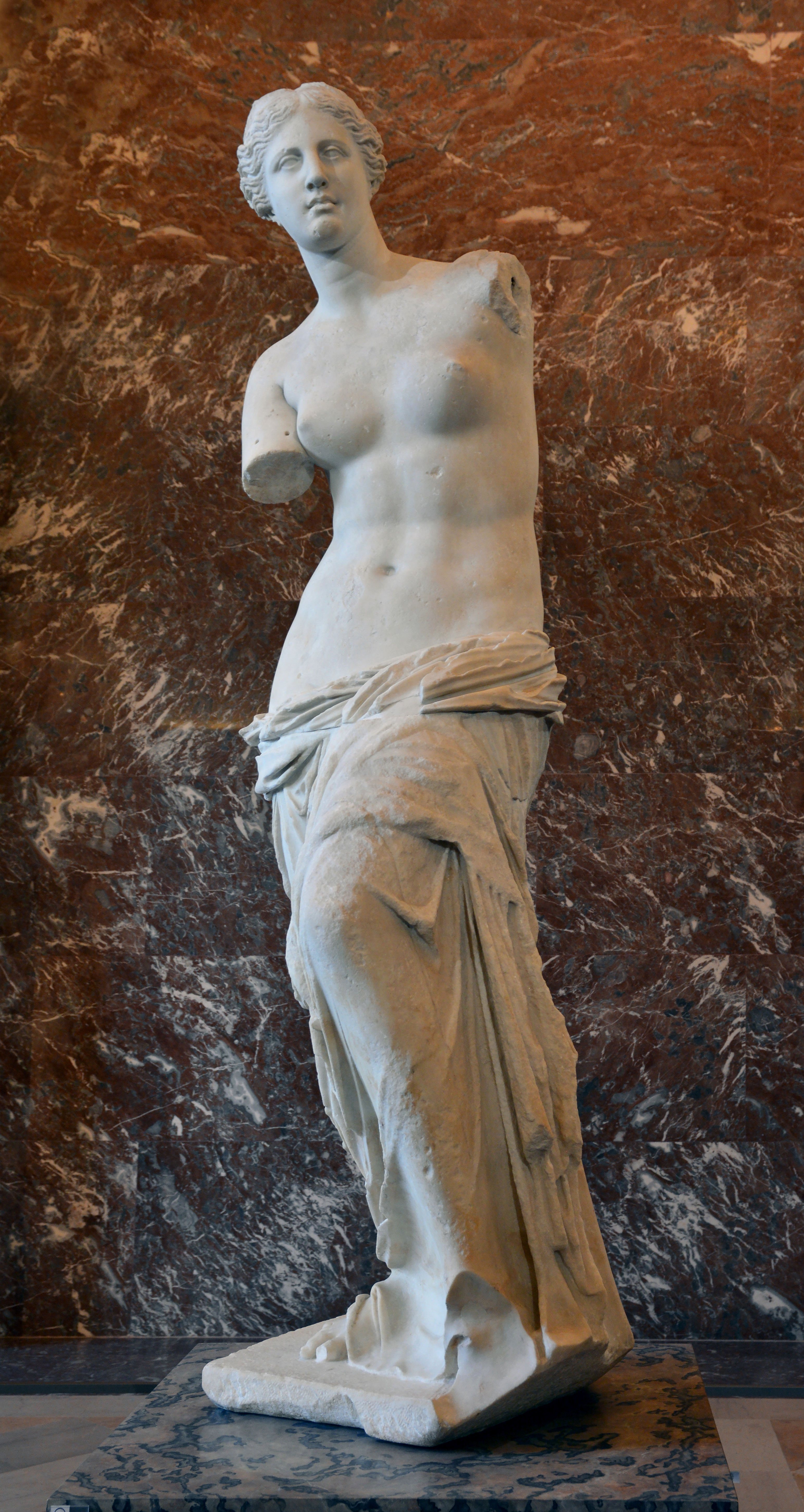
The Venus de Milo (Greek: Αφροδίτη της Μήλου, Aphroditi tis Milou) is an ancient Greek statue and one of the most famous works of ancient Greek sculpture. Initially it was attributed to the sculptor Praxiteles, but based on an inscription that was on its plinth, the statue is now thought to be the work of Alexandros of Antioch
Como habrán notado aquellos que se hayan tomado la molestia de revisar este blog, el mismo carece de juicios explícitos de mi parte. Esto es contrario a la norma en la mayor parte de los blogs, donde se prima la opinión y discusión. No obstante esta carencia de opinión explícita, en el blog se pone material que ilustra algún punto o tesis implícita, pero que sólo la imaginación del lector puede conectar. Para la mayor parte de los lectores puede parecer como un mero zambrote de ideas inconexas, he ahí la razón del nombre "potpourri" : olla donde se cuece un zancocho de marcada heterogeneidad. En realidad, estimado lector, más que discursivo o discusional, este blog es una especie de "trillo" señalizado, que debería permitirme una rápida consulta a aquellas pruebas que la vida siempre nos pone por delante y que debemos superar a partir de un fundamento. La superación de dichas pruebas depende en gran medida de la "solidez" del fundamento que nos sustente así como de nuestra habilidad y diligencia para encontrar las respuestas correctas en el contexto que nos depare la vida en ese momento. Como seres pensantes, en gran medida, una acción exitosa viene acompañada o precedida de un concepto adecuado que ilustre, conecte, señale, aclare, fortalezca o escude la acción o el actor. Este blog es una pequeña muestra de ese inquirir vital. Usted y yo señor lector somos los que le damos contenido al Puente. Eso es LEER!



 Posts
Posts


