Showing posts with label Santiago de Compostela. Show all posts

Wednesday, January 13, 2021

Giotto

Giotto
Giotto's "O"
Magister
Magisterial
Maestro
Magistral
Master
Travel
Chase Manhattan
Florence
Robert Burns
Botafumeiro
 
Psalm 66:15 
"I will offer unto thee burnt sacrifices of fatlings, with the incense of rams; I will offer bullocks with goats. Selah"
 
 
 "I saw...that the practical teaching of the masters of Art was summed up by the O of Giotto"~~~Ruskin: Queen of the Air, iii.


See the source image
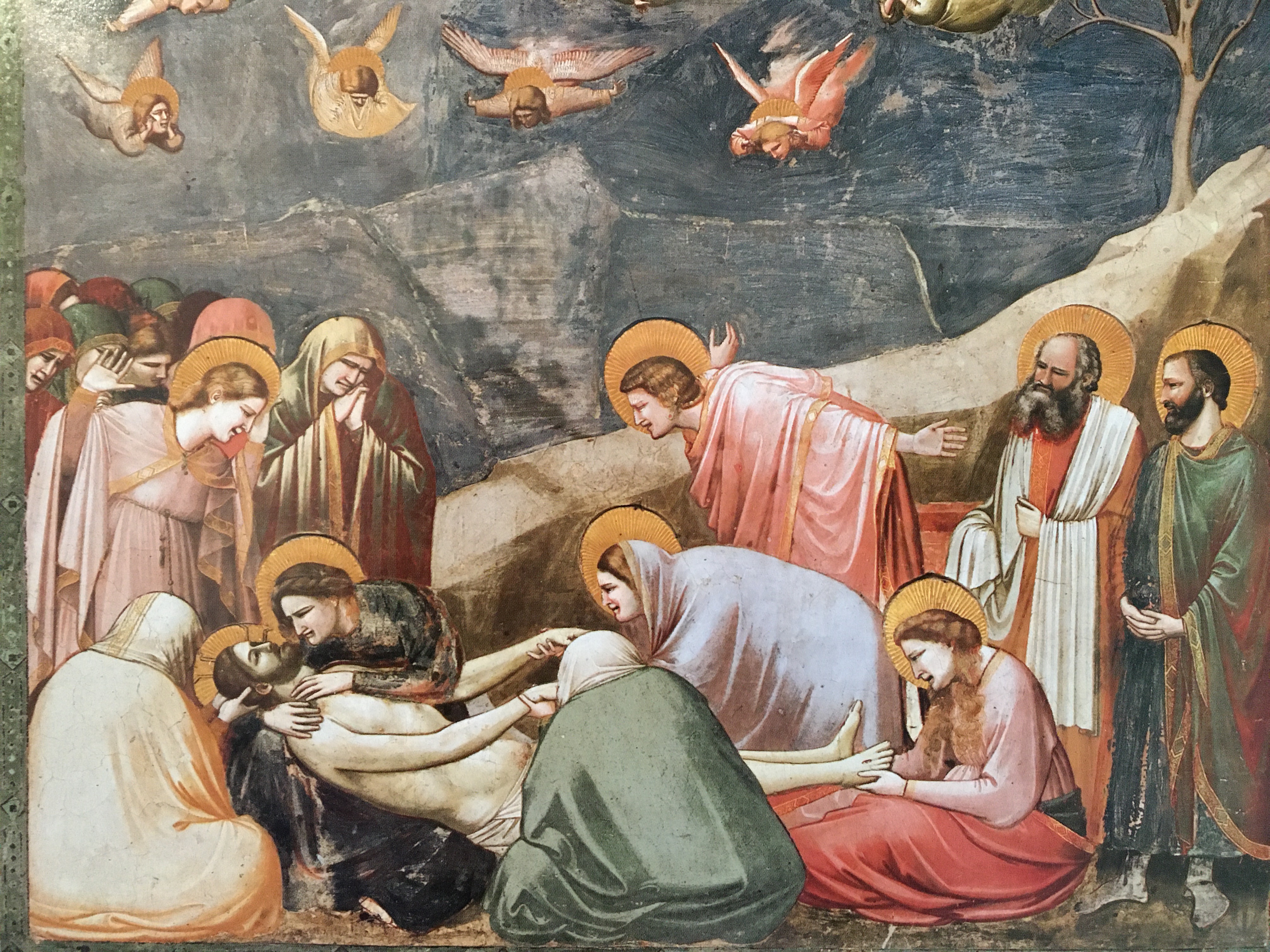
 Giotto - Compianto sul Cristro morto (1304-1306)
Lamentation over Christ


 "I saw...that the practical teaching of the masters of Art was summed up by the O of Giotto"~~~Ruskin: Queen of the Air, iii.


 "There is a great story about the Renaissance painter Giotto di Bondone (1267-1337) who is said to have won a Vatican contract from Pope Benedictus XII by submitting nothing more than a perfectly executed hand-drawn circle. The circle became famously known as the “O of Giotto”, and remains to this day part of artistic lore. But it is not famous for its realism; realism, as an aesthetic pursuit, was not yet a virtue in Giotto’s time, even if Giotto did much to usher that virtue in. It is famous, rather, for its symbolism: the idea of perfection. The perfect circle, we know, has had a long history of expressing the perfect, the ideal, and thus the divine. Giotto’s O becomes emblematic of a Renaissance obsession with symmetry, with the aesthetics of geometry, with the unity of the whole, and with the spiritual features of the circle. And we can see this worked out in the many Roman arches and halos that Giotto painted for churches and ecclesiastical patrons. But it was more. It also became emblematic of the human aspiration to master an ideally integrated world, one in which the divine imprint on the created order not only could be perceived with the eye and the mind, but also – and this the Renaissance championed most expressly – could be replicated by an aesthetic gesture. This gesture, perfectly rendered, is what so obviously endeared Giotto to the Pope, and allowed Giotto his celebrated career. His O was an immaculate sign of a higher order – indeed, the highest."~~~Posted by  in Critical Religion, University of Stirling


Santiago de Compostela, Galicia


Stela H, a high-relief in-the-round sculpture from Copán in Honduras
 
 Robert Burns Cottage.


See the source image
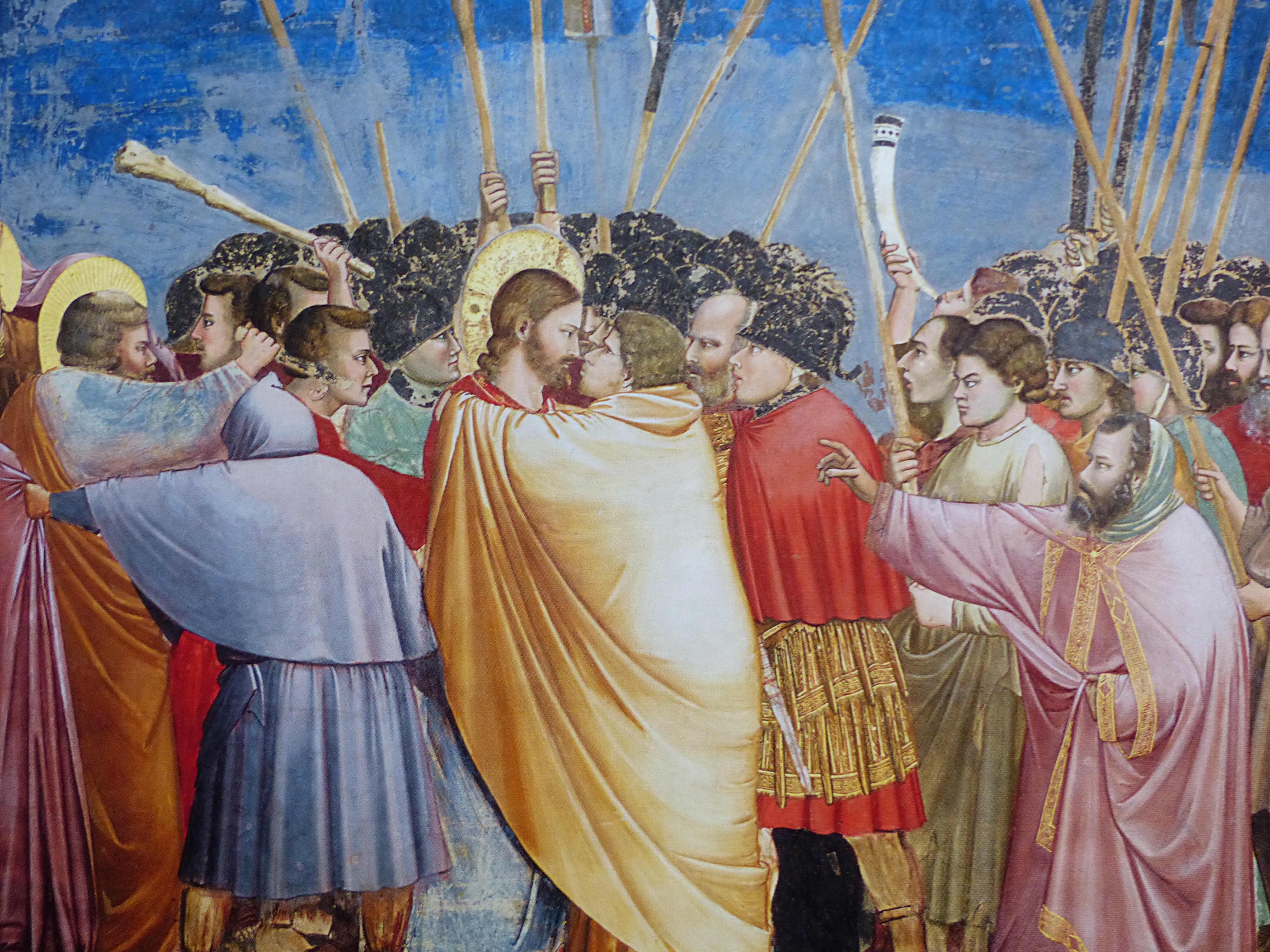
 Giotto, Kiss of Judas


Wonderful Bharatiya woman Hair style on a statue at Sri Bhuvaraha Swamy Temple in Srimushnam, Cuddalore district of Tami Nadu.

 
Chess: "Giotto" "Giotto's "O" "Magister" "Magisterial" "Maestro" "Magistral" "Master" "Travel" "Chase Manhattan" "Florence" "Robert Burns"
 
 
 Robert Burns Cottage.
This is the house in Alloway Ayrshire where Robert Burns was born on the 25th of January 1759, he grew up to be one of Scotland’s most beloved and celebrated poets, his works included Auld Lang Syne, Scots Wha Hae, Tam o’ Shanter and To a Mouse.
Poem.
To a Mouse, on Turning Her Up in Her Nest With the Plough,
Wee, sleekit, cowrin, tim'rous beastie,
O, what a pannic's in thy breastie!
Thou need na start awa sae hasty,
Wi' bickering brattle!
I wad be laith to rin an' chase thee,
Wi' murd'ring pattle!
I'm truly sorry man's dominion,
Has broken nature's social union,
An' justifies that ill opinion,
Which makes thee startle
At me, thy poor, earth-born companion,
An' fellow-mortal!.

Tuesday, October 25, 2011

Gauss

Gauss
The View
James Bond
Math
Vision
Santiago de Compostela
Prov.19:13
"A foolish son is the calamity of his father: and the contentions of a wife are a continual dropping." 


Harlequin Poison Dart Frog , Colombia
by Marent / Minden

Chess: "Gauss" "The View" "James Bond"  "Math" "Vision" "Santiago de Compostela"

Friday, April 3, 2009

Metro de Sevilla o Santiago de Compostela?

Sevilla
Santiago de Compostela
"MG"
"The Matrix"
Jam 1:18


"Of his own will begat he us with the word of truth, that we should be a kind of firstfruits of his creatures."


Source of the River Urederra, Navarre, Spain 3

Chess: "genius"
"The Matrix" "Sevilla" "MG" "James"

Metro de Sevilla o Santiago de Compostela?

The following is a pasting fromthe bLOG :Citas latinas

Verum esse ipsum factum


La verdad misma es lo hecho


En otra entrada de este blog (cogito ergo sum), se mencionó hace un tiempo la crítica del historiador, filósofo y profesor de retórica Giambattista Vico(1688-1744) al pensamiento de Descartes. Vico es una figura muy interesante pero relativamente poco conocida, fue un gran defensor del humanismo y de la importancia de la cultura clásica como base del conocimiento, por lo que creo que es justificado rendirle aquí un pequeño tributo.

Vico nació en Nápoles, hijo de un librero de recursos modestos. Aunque tuvo una completa educación formal -culminada con un título de doctor en derecho civil y canónico por la universidad de Nápoles en 1694-, siempre se consideró un autodidacta y su pensamiento es, sobre todo, el fruto de investigaciones y reflexiones muy personales. La mayor parte de su vida se desempeñó como profesor de retórica en esa misma universidad, fracasando sus intentos de obtener la más prestigiosa y mejor paga cátedra de jurisprudencia. Vico complementó sus ingresos durante toda su carrera ofreciendo lecciones privadas.

Su obra más importante y más estudiada hoy en día es la Scienza nuova publicada por primera vez en 1725 y considerada como la fundación de la moderna filosofía de la historia. El ambiente intelectual de la época estaba dominado por la filosofía cartesiana con su énfasis en la percepción y en las ideas claras y distintas como base del conocimiento. Para los cartesianos, su método permitía una investigación científica sólo del mundo natural, pues ámbitos como los de la historia, la política y la retórica, donde predominan las probabilidades, no otorgaban ninguna base firme para una construcción teórica estable. A lo largo de toda su obra, Vico elabora una profunda crítica del pensamiento cartesiano que es ejemplificada con sus axiomas verum esse ipsum factum (La verdad misma es lo hecho) o verum et factum convertuntur (lo verdadero y lo hecho son convertibles). Simplificando, para Vico, la única verdad que puede ser conocida es la que es el resultado de una acción creadora. La naturaleza puede, por lo tanto, ser pensada pero no comprendida, ello sólo es posible para Dios, su creador. El conocimiento humano por excelencia es el de los productos del hombre, como el lenguaje, el derecho o la historia.

En su tiempo Vico fue casi totalmente ignorado, su obra comenzaría a tener un mayor impacto recién en el siglo XIX, gracias a traducciones alemanas y francesas. Desde entonces, su obra ha influenciado a pensadores comoKarl Marx, R. G. Collingwood o Benedetto Croce. En la actualidad, Vico es considerado uno de los pensadores más influyentes de la modernidad. El tiempo ha permitido reconocer lo que sus contemporáneos no supieron ver.