"I will offer unto thee burnt sacrifices of fatlings, with the incense of rams; I will offer bullocks with goats. Selah"
"I saw...that the practical teaching of the masters of Art was summed up by the O of Giotto"~~~Ruskin: Queen of the Air, iii.
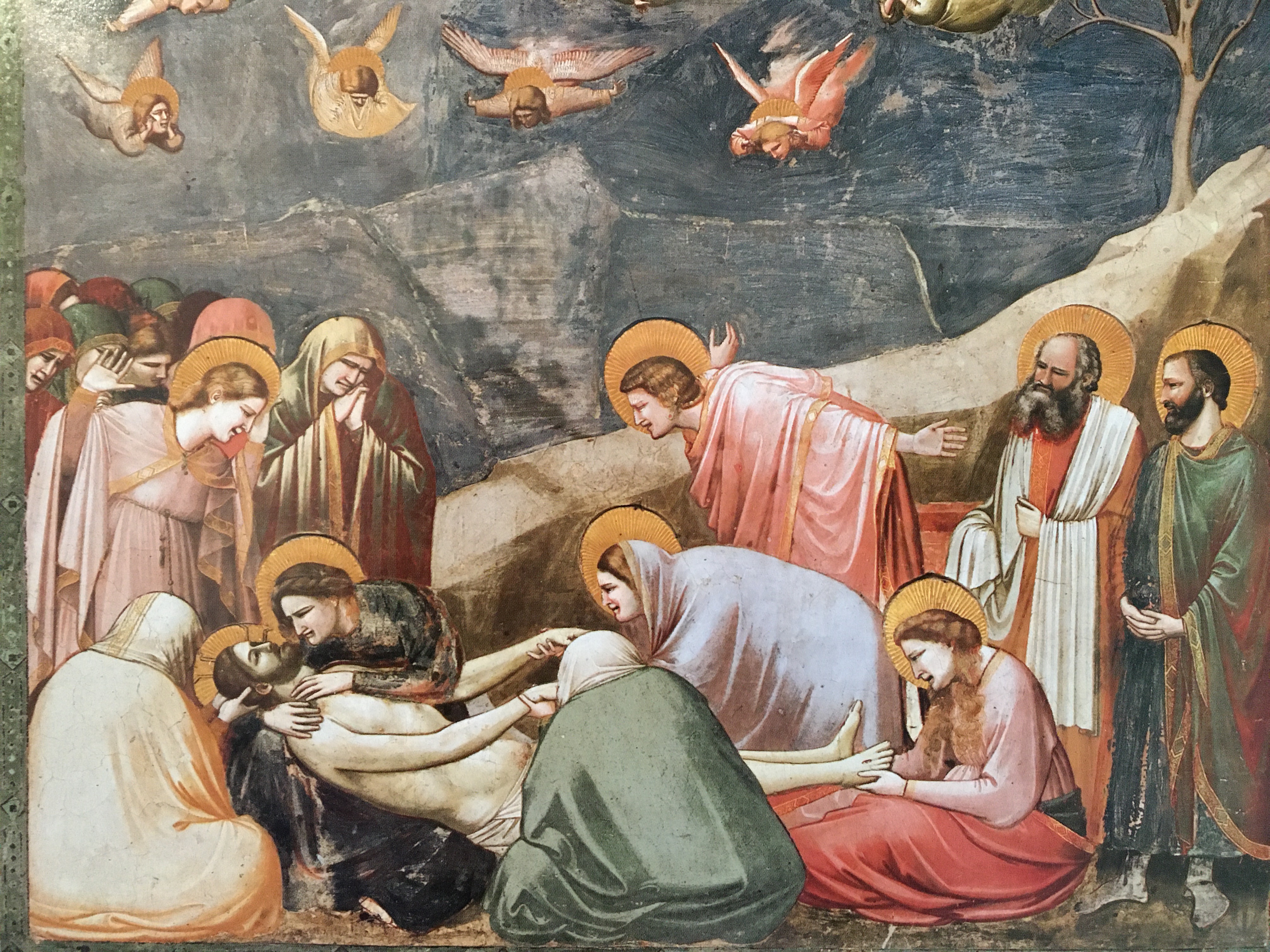
Giotto -Compianto sul Cristro morto(1304-1306)
Lamentation over Christ
"I saw...that the practical teaching of the masters of Art was summed up by the O of Giotto"~~~Ruskin: Queen of the Air, iii.
"There is a great story about the Renaissance painter Giotto di Bondone (1267-1337) who is said to have won a Vatican contract from Pope Benedictus XII by submitting nothing more than a perfectly executed hand-drawn circle. The circle became famously known as the “O of Giotto”, and remains to this day part of artistic lore. But it is not famous for its realism; realism, as an aesthetic pursuit, was not yet a virtue in Giotto’s time, even if Giotto did much to usher that virtue in. It is famous, rather, for its symbolism: the idea of perfection. The perfect circle, we know, has had a long history of expressing the perfect, the ideal, and thus the divine. Giotto’s O becomes emblematic of a Renaissance obsession with symmetry, with the aesthetics of geometry, with the unity of the whole, and with the spiritual features of the circle. And we can see this worked out in the many Roman arches and halos that Giotto painted for churches and ecclesiastical patrons. But it was more. It also became emblematic of the human aspiration to master an ideally integrated world, one in which the divine imprint on the created order not only could be perceived with the eye and the mind, but also – and this the Renaissance championed most expressly – could be replicated by an aesthetic gesture. This gesture, perfectly rendered, is what so obviously endeared Giotto to the Pope, and allowed Giotto his celebrated career. His O was an immaculate sign of a higher order – indeed, the highest."~~~PostedbyAndrew W. HassinCritical Religion,University of Stirling
Santiago de Compostela, Galicia
Stela H, a high-relief in-the-round sculpture from Copán in Honduras
Robert Burns Cottage.
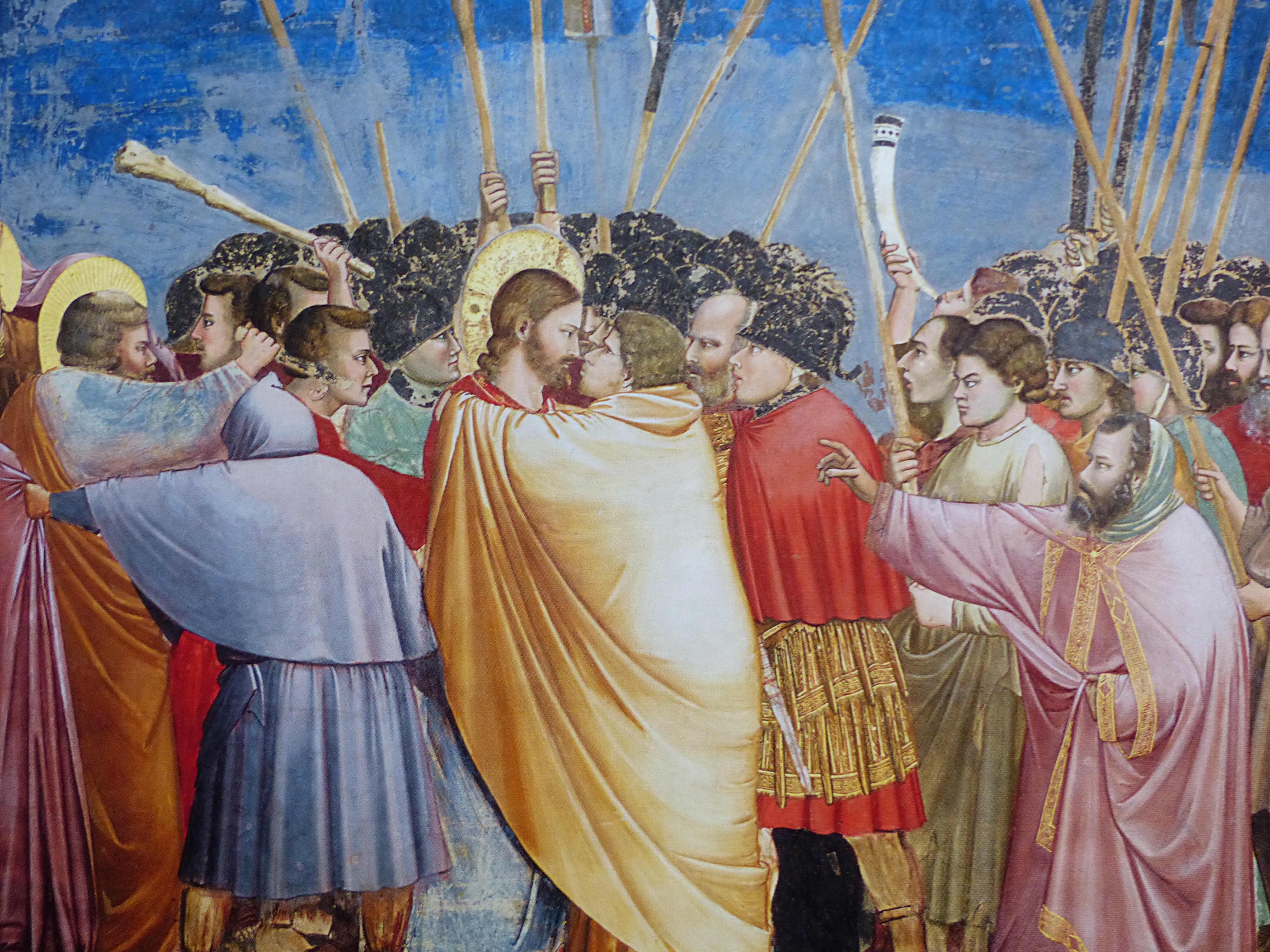
Giotto, Kiss of Judas
Wonderful Bharatiya woman Hair style on a statue at Sri Bhuvaraha Swamy Temple in Srimushnam, Cuddalore district of Tami Nadu.
This is the house in Alloway Ayrshire where Robert Burns was born on the 25th of January 1759, he grew up to be one of Scotland’s most beloved and celebrated poets, his works included Auld Lang Syne, Scots Wha Hae, Tam o’ Shanter and To a Mouse.
Poem.
To a Mouse, on Turning Her Up in Her Nest With the Plough,
Civilization Haggis Chieftains Trencher Estómago Pan Cita Robert Burns Rom.8:37 "Nay, in all these things we are more than conquerors through him that loved us." Gen.6:4 "There were giants in the earth in those days; and also after that, when
the sons of God came in unto the daughters of men, and they bare children to them, the same became mighty men which were of old, men of renown."
The Virgin and Child ('The Bridgewater Madonna'). About 1507. Raphael.Edinburgh, National Gallery of Scotland
Address To A Haggis
"Fair fa' your honest, sonsie face, Great chieftain o the puddin'-race! Aboon them a' ye tak your place, Painch, tripe, or thairm: Weel are ye worthy o' a grace As lang's my arm."~~~Robert Burns
A Traditional Haggis with Neeps and Tatties & a Wee Dram!
Here in Donegal, with our historic association with Scotland and Scottish traditions, we have long been enjoying the lightly spiced and peppery flavours of this famous dish. Haggis is traditionally eaten on"Burns Night"which falls on the25th January and is the birthday of the famous Scottish poet,Robert Burns.
"Special needs...engender special deities to provide for them"~~~Edward Conze
"He endows the world with poetic beauty."~~~Walter Sutton
The Burns Night address to the haggis - Friends: The One with the Coalition Burns
The most famous object in the Mildenhall treasure is the large, highly decorated circular platter, usually known as the Great Dish, or as the Neptune or Oceanus Dish. Bacchic imagery has a long history inGreekandRomanart, and this example, on a magnificent silver vessel measuring 60.5 centimetres in diameter and weighing 8,256 g, is one of the finest to survive from the late Roman period. The decoration, worked in low relief and engraved lines on the front surface of the silver, alludes to the worship andmythologyof Bacchus, on land and in the sea. The staring face in the centre is Oceanus, his beard formed of seaweeds fronds and with dolphins in is hair. The inner circle, bordered by scallop shells, consists of sea nymphs riding mythological marine creatures, a seahorse, a trion, a sea-stag, and a ketos, a dragon-like sea monster. The wider outer frieze features Bacchus himself, holding a bunch of grapes and a thyrsus (a staff-tipped with a pine-cone) and resting a foot on his panther, presiding over a celebration of music, dancing and drinking in his honor. The participants include the heroHercules, overcome by wine, the goat-legged godPan, and sundry satyrs and Maenads (female devotees). From West Row, Mildenhall, Suffolk, UK. 4th century CE. (The British Museum, London)
This poem was written by Burns to celebrate his appreciation of the Haggis. As a result Burns and Haggis have been forever linked.
This particular poem is always the first item on the programme of Burns' suppers. The haggis is generally carried in on a silver salver at the start of the proceedings.
As it is brought to the table a piper plays a suitable, rousing accompaniment.
One of the invited artistes then recites the poem before the theatrical cutting of the haggis with the ceremonial knife.
Address to a Haggis
Fair fa' your honest, sonsie face,
Great chieftain o the puddin'-race!
Aboon them a' ye tak your place,
Painch, tripe, or thairm:
Weel are ye worthy o' a grace
As lang's my arm.
The groaning trencher there ye fill,
Your hurdies like a distant hill,
Your pin wad help to mend a mill
In time o need,
While thro your pores the dews distil
Like amber bead.
His knife see rustic Labour dight,
An cut you up wi ready slight,
Trenching your gushing entrails bright,
Like onie ditch;
And then, O what a glorious sight,
Warm-reekin, rich!
Then, horn for horn, they stretch an strive:
Deil tak the hindmost, on they drive,
Till a' their weel-swall'd kytes belyve
Are bent like drums;
The auld Guidman, maist like to rive,
'Bethankit' hums.
Is there that owre his French ragout,
Or olio that wad staw a sow,
Or fricassee wad mak her spew
Wi perfect scunner,
Looks down wi sneering, scornfu view
On sic a dinner?
Poor devil! see him owre his trash,
As feckless as a wither'd rash,
His spindle shank a guid whip-lash,
His nieve a nit;
Thro bloody flood or field to dash,
O how unfit!
But mark the Rustic, haggis-fed,
The trembling earth resounds his tread,
Clap in his walie nieve a blade,
He'll make it whissle;
An legs an arms, an heads will sned,
Like taps o thrissle.
Ye Pow'rs, wha mak mankind your care,
And dish them out their bill o fare,
Auld Scotland wants nae skinking ware
That jaups in luggies:
But, if ye wish her gratefu prayer,
Gie her a Haggis
Address to a Haggis Translation
Fair and full is your honest, jolly face,
Great chieftain of the sausage race!
Above them all you take your place,
Stomach, tripe, or intestines:
Well are you worthy of a grace
As long as my arm.
The groaning trencher there you fill,
Your buttocks like a distant hill,
Your pin would help to mend a mill
In time of need,
While through your pores the dews distill
Like amber bead.
His knife see rustic Labour wipe,
And cut you up with ready slight,
Trenching your gushing entrails bright,
Like any ditch;
And then, O what a glorious sight,
Warm steaming, rich!
Then spoon for spoon, the stretch and strive:
Devil take the hindmost, on they drive,
Till all their well swollen bellies by-and-by
Are bent like drums;
Then old head of the table, most like to burst,
'The grace!' hums.
Is there that over his French ragout,
Or olio that would sicken a sow,
Or fricassee would make her vomit
With perfect disgust,
Looks down with sneering, scornful view
On such a dinner?
Poor devil! see him over his trash,
As feeble as a withered rush,
His thin legs a good whip-lash,
His fist a nut;
Through bloody flood or field to dash,
O how unfit.
But mark the Rustic, haggis-fed,
The trembling earth resounds his tread,
Clap in his ample fist a blade,
He'll make it whistle;
And legs, and arms, and heads will cut off
Like the heads of thistles.
You powers, who make mankind your care,
And dish them out their bill of fare,
Old Scotland wants no watery stuff,
That splashes in small wooden dishes;
But if you wish her grateful prayer,
Give her [Scotland] a Haggis!
Libra (♎) is the seventh astrological sign in the Zodiac. It spans the 180–210th degree of the zodiac, between 180 and 207.25 degree of celestial longitude. Under the tropical zodiac, Sun transits this area on average between (northern autumnal equinox)
September 23 and October 22, and under the sidereal zodiac, the sun
currently transits the constellation of Libra from approximately October
16 to November 17. The symbol of the scales is based on the Scales of Justice held by Themis, the Greek personification of divine law and custom.[4] She became the inspiration for modern depictions of Lady Justice. The ruling planet of Libra is Venus.
Libra is the only constellation in the sky represented by an inanimate
object. The other eleven signs are represented either as an animal or
mythological characters throughout history.
Interestingly, Libra was not included in the earliest Zodiacs. It is
believed to have been known to the Egyptians as Zugon, or the Yoke,
where only the beam of the scales was represented, typifying the
Nilometer, the instrument by which the inundations of the Nile were
measured.
Burns was also a man inspired by his country – perhaps his greatest
talent was for livening up the old Scots’ tongue, and writing the most
vivid accounts of the personalities he would meet in his travels across
Scotland.
Como habrán notado aquellos que se hayan tomado la molestia de revisar este blog, el mismo carece de juicios explícitos de mi parte. Esto es contrario a la norma en la mayor parte de los blogs, donde se prima la opinión y discusión. No obstante esta carencia de opinión explícita, en el blog se pone material que ilustra algún punto o tesis implícita, pero que sólo la imaginación del lector puede conectar. Para la mayor parte de los lectores puede parecer como un mero zambrote de ideas inconexas, he ahí la razón del nombre "potpourri" : olla donde se cuece un zancocho de marcada heterogeneidad. En realidad, estimado lector, más que discursivo o discusional, este blog es una especie de "trillo" señalizado, que debería permitirme una rápida consulta a aquellas pruebas que la vida siempre nos pone por delante y que debemos superar a partir de un fundamento. La superación de dichas pruebas depende en gran medida de la "solidez" del fundamento que nos sustente así como de nuestra habilidad y diligencia para encontrar las respuestas correctas en el contexto que nos depare la vida en ese momento. Como seres pensantes, en gran medida, una acción exitosa viene acompañada o precedida de un concepto adecuado que ilustre, conecte, señale, aclare, fortalezca o escude la acción o el actor. Este blog es una pequeña muestra de ese inquirir vital. Usted y yo señor lector somos los que le damos contenido al Puente. Eso es LEER!




 Posts


