Showing posts with label Crystal. Show all posts

Thursday, February 13, 2025

Bill Gates

Northeaster
Diagonal 
Bill Gates 
Crystal

Proverbs 2:2
“So that thou incline thine ear unto wisdom, and apply thine heart to understanding;”


"Almost all normal people want to be rich without great effort"~~~F. Scott Fitzgerald


Northeaster is one of several paintings on marine subjects by the late-19th-century American painter Winslow Homer. Like The Fog Warning and Breezing Up, he created it during his time in Maine. It is on display in the Metropolitan Museum of Art in New York. Viewers are presented a struggle of elements between the sea and the rocky shore. Winslow Homer excelled in painting landscape paintings that depicted seascapes and mountain scenery.
After extensive travel, Homer settled in Prouts Neck, Maine. He had a studio built for him, which was completed in 1884, and painted marine subjects, including the hard lives of the fishermen and their families. He increasingly chose to depict the sea itself, and was especially attracted to stormy seas. During this period, he painted a wide array of seascapes such as The Gulf Stream (1899), Moonlight – Wood's Island Light (1886), Northeaster and Cannon Rock (both 1895) and Early Morning After a Storm at Sea (1902). Many of his paintings depict the battlefront of the sea and the shore, and the waves crashing onto the rocky shore. It has been said that they "are among the strongest expressions in all art of the power and dangerous beauty of the sea". Northeaster shows the waves while the Northeaster blows. Northeasters are storms along the upper East Coast of the United States that derive their name from the direction of the wind as it rotates onto land. The painting dates from 1895, but Homer reworked it by 1901


Chess: "Northeaster" "Diagonal""Bill Gates" "Crystal"

Saturday, January 7, 2017

Greek Fire

Greek Fire
Leonardo
Waterford
Phoenix
Firestone
Leo
Whigs
"Elementary!: But Naturally!" 
Llama
Azteca
Inca
Newton
Universal Law of Gravity
Crystal

Gen.1:23
"And the evening and the morning were the fifth day."

1Cor.11:14
 "Doth not even nature itself teach you, that, if a man have long hair, it is a shame unto him?"


“For instance the stone which by nature moves downwards cannot be habituated to move upwards, not even if one tries to train it by throwing it up ten thousand times; nor can fire be habituated to move downwards”~~~Aristotle: Nichomachean Ethics. Bk.2


"It is not worth the while to go round the word to count the cats in Zanzibar"~~~ Thoreau


The  “Greek  fire”   was  one  of  the  strongest  and  most  mysterious  weapons  of  the  Byzantine  Empire  (considering  their  composition).  The  Arabs  called  “naphtha”  (‘naft’)  their  own  corresponding  incendiary  substance  for  military  purposes,  a  term  which  usually  means  the  natural  unrefined  oil  or  the  refined  products  of  its  distillation.  The  use  of  flammable  substances  in  military  operations  on  land  and  sea,  was  known  to  the  Greeks  as  early  as  the  Classical  Period,  who  developed  it  especially  during  the  Hellenistic  Period.


Waterford Crystal


Llama: Lama glama


 Sir Isaac Newton 


 Phoenix


Chess: "Greek Fire" "Leonardo""Waterford" "Phoenix" "Firestone" "Leo" "Whigs" "Llama" "Azteca" "Inca" "Newton" "Universal Law of Gravity" "Crystal" "Elementary!" "But naturally!"


Wednesday, February 24, 2016

Granada

Granada
Jacob
Indigo
Purple
Italy
Slipper
Crystal
Guaria Morada
Washington Irving
Usain Bolt
Stephen King

Prov.29:14
"The king that faithfully judgeth the poor, his throne shall be established for ever."


 Gustave Doré: Jacob Wrestling with the Angel


The Alhambra is the crown of Granada and another one of Spain's UNESCO World Heritage Sites. Perched majestically on top of one of Granada's hills, ...


 Indigo 


ITALY: Catedral de Milán


“The congregation broke into a hubbub of amazement. Philip was skeptical. There was a difference between the way God worked and the way Jack worked, and this had the hallmark of Jack. But Philip remained silent.”~~~Ken Follet: The Pillars of the Earth Ch.13


Usain Bolt 


 Crystal


Guaria Morada


Chess: "Granada" "Indigo" "Purple" "Italy" "Slipper" "Crystal" "Guaria Morada" "Washington Irving" "Usain Bolt" "Stephen King" "Jacob"

Tuesday, November 11, 2014

Waterford

Crystal
Bohemia
St. Andrew
San Andrés
Frank Sinatra
Crystal
Glassware 
Waterford 
Czech
New Year's Eve

1Cor.10:31
"Whether therefore ye eat, or drink, or whatsoever ye do, do all to the glory of God."


"Moral courage is the most valuable and usually the most absent characteristic in men." General George S. Patton.


"Document everything, leave nothing to chance... because one day, some cockroach will crawl up out of the latrine and deny all this ever happened, God Damn Them." - Gen. George Patton, spoken during visit to Buchenwald.


 General George S. Patton


Starting with the Invasion of Sicily in July of 1943, and culminating in the June 6, 1944, D-Day invasion of Normandy, Allied forces took the fight to the Axis powers in many locations across Western Europe. The push into Italy began in Sicily, but soon made it to the Italian mainland, with landings...


Joachim Peiper: uno de los más condecorados oficiales del régimen Nazi de Adolfo Hitler, convicto de crímenes de guerra en Francia e Italia fue asesinado en Francia en 1976 por ex-comunistas franceses
Highly decorated SS-Standartenführer Joachim Peiper, 1.SS Division Leibstandarte SS Adolf Hitler. Peiper was convicted of war crimes in France and Italy and he was murdered in France in 1976 by unidentified assailants thought to be ex communist French partisans.


“This successful industry of England, with its plethoric wealth”~~~Carlyle


 Waterford Crystal is a manufacturer of crystal. It is named after the city of Waterford, Ireland. Waterford Crystal is owned by WWRD Holdings Ltd, a luxury goods group which also owns and operates the Wedgwood and Royal Doulton brands.


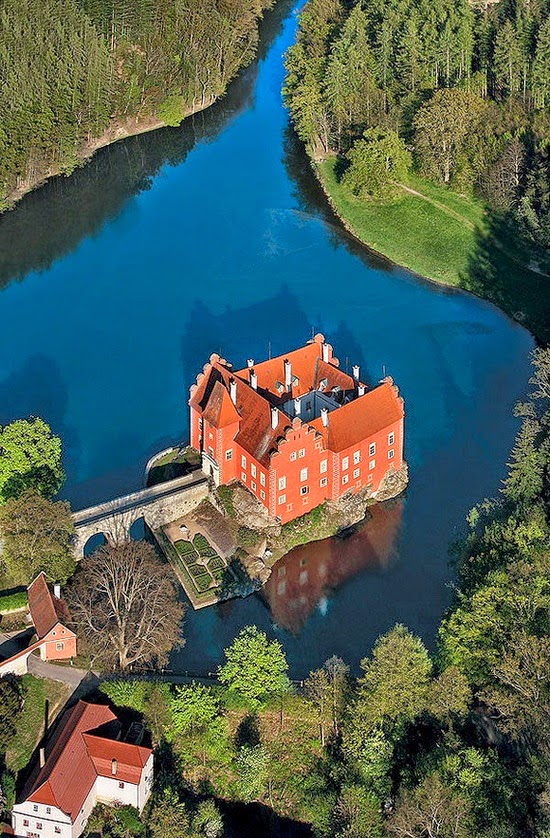
Červená Lhota Castle, Czech Republic 
 A water castle is a castle or stately home whose site is entirely surrounded by moats or natural water bodies. The water that surrounds the castle was used as an obstacle to hinder an attacker


"OF THE VARIOUS NATIONAL GROUPS THAT SETTLED IN TEXAS, and there were more than twenty—Germans, Czechs, Poles, Wends —the one which gave the area its basic character came from Ireland. They arrived in great numbers, filtering down the famed Natchez Trace from Pennsylvania, Ohio, Kentucky and Tennessee."~~~James A. Michener: TEXAS Ch5 The Trace


Chess: "Crystal" "Frank Sinatra" "Bohemia" "Glassware" "Waterford" "Czech" "New Year's Eve""Crystal"

Wednesday, June 5, 2013

Vitruvius

Vitruvius
Vidrio
Glass
Crystal
Carl Sandburg
Luke 1:14
"And thou shalt have joy and gladness; and many shall rejoice at his birth."

"The foam ..mounts in an instant to the ridge of the sand glacis"~ ~ ~R. L. Stevenson


Chess:  "Vitruvius" "Glass" "Crystal" "Carl Sandburg" "Gladstone" "glance"

Carl Sandburg

por Jorge Luis Borges
Carl Sandburg —acaso el primer poeta de Norteamérica y sin duda el más norteamericano— nació en Galesburg, estado de Illinois, el 6 de enero de 1878. Su padre era un herrero sueco, August Jonsson, empleado en los talleres del Ferrocarril de Chicago. Como los Jonsson, Johnson, Jensen, Johnston, Johnstone, Jason, Janssen y Jansen abundaban en el taller, su padre se mudó a otro apellido más inequívoco y optó por el de Sandburg.
Sin recurrir a la transmigración, Cari Sandburg —como Walt Whitman, como Mark Twain, como su campanero Sherwood Anderson— ha cursado muchos destinos, algunos de lo más laboriosos. De los trece a los diecinueve años fue sucesivamente portero en una barbería, carrero, tramoyista, peón en un horno de ladrillos, carpintero, lavaplatos en hoteles de Kansas City, Omaha y Denver, peón de chacra, atorrante, pintor de estufas y pintor de paredes. En el 98 se alistó como voluntario en el seis de infantería de Illinois, y sirvió casi un año en Puerto Rico, contra los españoles. (A su poesía no le gusta el recuerdo de esa aventura militar.) Un compañero de armas lo instó a educarse. A su vuelta ingresó en el Colegio de Galesburg.De esa fecha (1899-1902) datan sus primeros escritos: algunos ejercicios en prosa y verso que no se parecen a él. En aquel tiempo, Sandburg creía que le interesaba más el basketball que las letras. Su primer libro —que es de 1904— ya contiene algunos renglones que un discípulo suyo no rehusaría. El Sandburg esencial tarda diez años más en aparecer, en el poema «Chicago». Casi inmediatamente, América lo reconoce, lo aplaude, lo aprende de memoria, y también lo insulta. Como su poesía no tiene rimas, los opositores resuelven que no es poesía. Los partidarios contraatacan, invocando los nombres y los ejemplos de Enrique Heine, del rey David y de Walt Whitman. Inútil repetir la discusión, todavía corriente en Buenos Aires, aunque ya del todo arrumbada en los otros países del mundo...
En 1908, Sandburg (entonces periodista en Milwaukee) se casó. En 1917 entró en el «Daily News»; en 1918 hizo un piadoso viaje a Suecia y Noruega, tierras de sus mayores. Un par de años después publicó Smoke and Steel («Humo y Acero»). La dedicatoria es así: «Al coronel Eduardo J. Steichen, pintor de nocturnos y rostros, grabador de vislumbres y de momentos, oyente de vientos azules de la tarde y frescas rosas amarillas, soñador y hallador, jinete de grandes mañanas en jardines, valles, batallas».
Sandburg ha recorrido los diversos estados de la Unión, dando conferencias, leyendo con lenta intensidad sus poemas, recogiendo y cantando viejos cantares. Hay discos de fonógrafo que registran la seria voz y la guitarra de Sandburg. Las poesías de Sandburg están compuestas en un inglés que se parece a su voz y a su modo de hablar: un inglés oral, conversado, con palabras que no están en los diccionarios y que están en las calles americanas, un inglés criollo en suma. En sus poemas hay un juego incesante de falsas torpezas, de habilidades que quieren pasar por descuidos.
Hay en Carl Sandburg una fatigada tristeza, una tristeza de atardecer en la llanura, de ríos barrosos, de recuerdos inútiles y precisos, de hombre que siente día y noche el desgaste del tiempo. Whitman, en un Nueva York de tres o cuatro pisos, celebró las ciudades verticales que se tiran al cielo; Sandburg, en la vertiginosa Chicago, suele prever el tiempo remoto en que la soledad, las ratas y la llanura se repartirán los escombros de su ciudad.
Sandburg ha publicado seis libros de poemas. Uno de los últimos se titula Buenos días, América. Es autor, asimismo, de tres libros de cuentos para niños y de una minuciosa biografía de los años mozos de Lincoln, otro hombre de Illinois. En septiembre de este año ha publicado un largo poema épico: El pueblo, sí.
Un poema de Sandburg: Calles demasiado viejas
Caminé por las calles de una vieja ciudad, y eran flacas las calles como gargantas de pescados duros del mar, salados y guardados en barriles por muchos años.
¡Qué viejas, qué viejas, qué viejas somos! —seguían diciendo las paredes, arrimadas unas a otras como mujeres viejas del pueblo, como viejas comadres que están cansadas y que hacen lo indispensable.
Lo más grande que la ciudad podía ofrecerme a mí, un forastero, eran estatuas de los reyes, en cada esquina bronces de reyes, viejos reyes barbudos que escribían libros y hablaban del amor de Dios para todos los pueblos, y reyes jóvenes que atravesaron con ejércitos las fronteras, rompiendo la cabeza de los contrarios y agrandando sus reinos.
Lo más extraño de todo para mí, un extraño en esta vieja ciudad, era el ruido del viento que serpeaba en las axilas y en los dedos de los reyes de bronce: ¿No hay evasión? ¿Esto durará para siempre?
Temprano, en una racha de nieve, uno de los reyes gritó: «Échenme abajo, donde no me puedan mirar las comadres cansadas; tiren el bronce mío a un fuego feroz, y fúndanme en collares para niños que bailan».

Notas:

Revista Hogar, 16 De Octubre De 1936

Saturday, October 30, 2010

Crystal

Labyrinth
Daedalus
Icarus
Crystal 
Earnest
Eccles. 7:7
"Surely oppression maketh a wise man mad; and a gift destroyeth the heart."


Solar Prominence Eruption


 Icarus and Daedalus byLord Frederick Leighton
Chess: "Labyrinth" "Daedalus" "Icarus" "Crystal" "Earnest"

Daedalus
In Greek mythology, Daedalus (Latin, also Hellenized Latin Daedalos, Greek Daidalos (Δαίδαλος) meaning "cunning worker", and Etruscan Taitale) was a skillful craftsman and artisan.[1] Daedalus had two sons: Icarus and Iapyx, along with a nephew, whose name is Perdix. He is first mentioned by Homer as the creator of a wide dancing-ground for Ariadne.[2] The Labyrinth on Crete, in which the Minotaur (part man, part bull) was kept, was also created by the artificer Daedalus. In the story of the labyrinth Hellenes told, the Athenian hero Theseus is challenged to kill the Minotaur, finding his way with the help of Ariadne's thread. Daedalus' appearance in Homer is in an extended simile, "plainly not Homer's invention," Robin Lane Fox observes: "he is a point of comparison and so he belongs in stories which Homer's audience already recognized." [3] In Bronze Age Crete, an inscription da-da-re-jo-de has been read as referring to a place at Knossos,[4] and a place of worship.[5]
In Homer's language, objects which are daidala are finely crafted. They are mostly objects of armour, but fine bowls and furnishings are daidala, and on one occasion so are the "bronze-working" of "clasps, twisted brooches, earrings and necklaces" made by Hephaestus while cared for in secret by the goddesses of the sea.[6]
Ignoring Homer, later writers envisaged the labyrinth as an edifice rather than a single dancing path to the center and out again, and gave it numberless winding passages and turns that opened into one another, seeming to have neither beginning nor end.[7] Ovid, in his Metamorphoses, suggests that Daedalus constructed the Labyrinth so cunningly that he himself could barely escape it after he built it.[8] Daedalus built the labyrinth for King Minos, who needed it to imprison his wife's son the Minotaur. The story is told that Poseidon had given a white bull to Minos so that he might use it as a sacrifice. Instead, Minos kept it for himself; and in revenge, Poseidon made his wife Pasiphaë lust for the bull.[9] For Pasiphaë, as Greek mythologers interpreted it, Daedalus also built a wooden cow so she could mate with the bull, for the Greeks imagined the Minoan bull of the sun to be an actual, earthly bull.
Athenians transferred Cretan Daedalus to make him Athenian-born, the grandson[10] of the ancient king Erechtheus, who fled to Crete, having killed his nephew. Over time, other stories were told of Daedalus. In the nineteenth century, Thomas Bulfinch combined these into a single synoptic view of material which Andrew Stewart calls a "historically-intractable farrago of 'evidence', heavily tinged with Athenian cultural chauvinism".