Tuesday, December 8, 2015

Bloody Mary

Bloody Mary
Pointer
Machu Picchu
Honduras
Ai
Cristiana
Guide

Prov.10:17
"He is in the way of life that keepeth instruction: but he that refuseth reproof erreth."


United Nations climate chief Christiana Figueres (left) greets Prince Charles as he arrives for the COP21, United Nations Climate Change Conference, in Le Bourget, outside ParisPicture: AP Photo/Christophe Ena


This is especially true if you decided to hike the mountain behind Machu Picchu. Wayna Picchu is even steeper and is often referred to as the “Stairs of Death”, because the climb down  features stairs that would better be referred to as ladders.


Australian War Memorial

Chess: "Bloody Mary" "Pointer" "Machu Picchu" "Honduras" "Ai" "Cristiana" "Guide"

Wednesday, December 2, 2015

Connecticut

Connecticut
Hartford
Membrana
Skin
Fur
Kilt
Barrio Cristo Rey
Mark Twain

Mark 1:45
"But he went out, and began to publish it much, and to blaze abroad the matter, insomuch that Jesus could no more openly enter into the city, but was without in desert places: and they came to him from every quarter."


Connecticut State Capitol, Hartford, Connecticut


The Soldiers and Sailors Memorial Arch is a notable memorial to the American Civil War located in Hartford, Connecticut. It was the first permanent triumphal arch in America, and honors the 4,000 Hartford citizens who served in the war, and the 400 who died for the Union.


Chess: "Connecticut" "Hartford" "Membrana" "Skin" "Fur" "Barrio Cristo Rey" "Mark Twain" "Kilt"

Wednesday, November 25, 2015

Leap

Leap
Leaf
Leader
Reader's Digest
Duty
India
Thursday 
Apostle

Mark 1:12
"And immediately the Spirit driveth him into the wilderness."


“methinks it were an easy leap/ To pluck bright honor from the pale-face’d moon”~~~Shakespeare


Leaf


"St. Matthew the Evangelist" by Camillo Rusconi (1708-1718) Basilica of St. John Lateran, Rome


Backwaters, Kerala, India


A woman from State of Rajasthan, India in typical regional attire.


Black Thursday, February 6th. 1851, as depicted by William Strutt in 1864
The Black Thursday bushfires were a devastating series of fires that swept the state of Victoria, Australia on 6 February 1851. They are considered the largest Australian bushfires in a populous region in recorded history, with approximately 5 million hectares, or a quarter of Victoria, being burnt. Twelve human lives were lost, along with one million sheep, thousands of cattle and countless native animals.


Chess: "Leap" "Leaf" "Leader" "Reader's Digest" "Duty" "India" "Thursday" "Apostle"

Monday, November 23, 2015

Thirteen

Thirteen
Being
Como : How
Eating
Supper
Likewise
The Hunger Games 
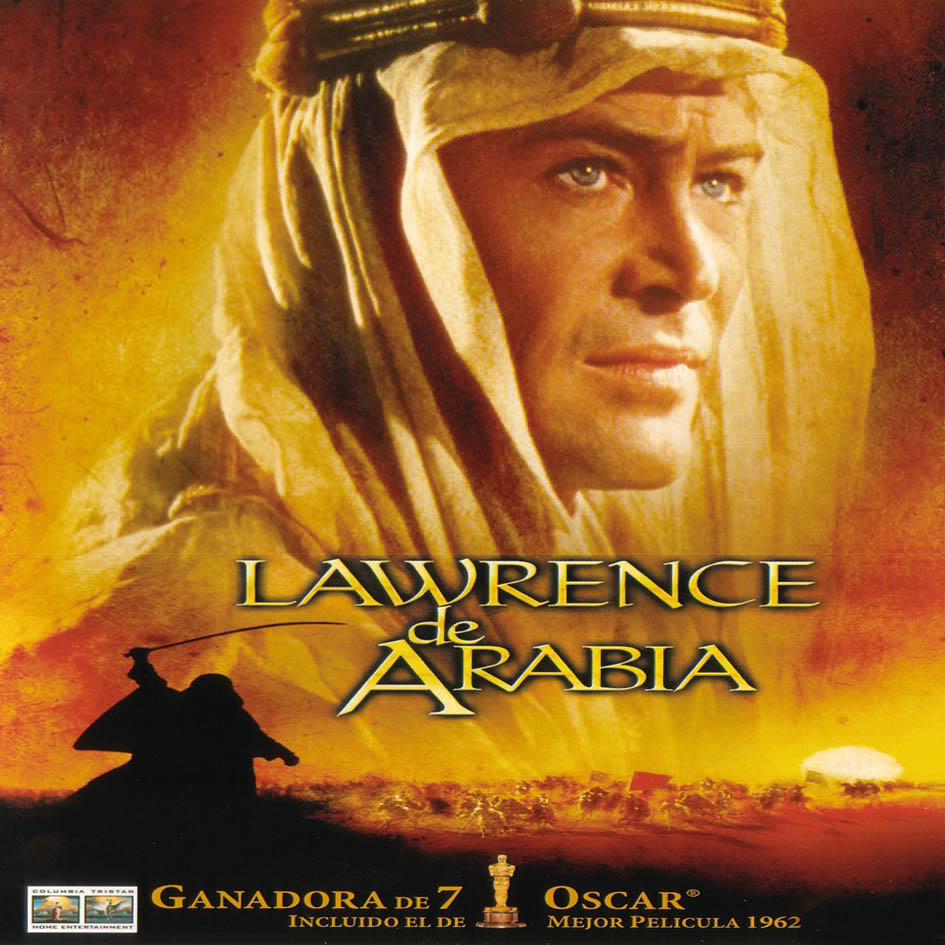
Lawrence

Mark 1:13
"And he was there in the wilderness forty days, tempted of Satan; and was with the wild beasts; and the angels ministered unto him."

DANTE:
Inferno: Canto I 

Nel mezzo del cammin di nostra vita
  mi ritrovai per una selva oscura
  che' la diritta via era smarrita.


The Last Supper (Italian: Il Cenacolo or L'Ultima Cena is a late 15th-century mural painting by Leonardo da Vinci in the refectory of the Convent of Santa Maria delle Grazie, Milan. It is one of the world's most famous paintings, and one of the most studied, scrutinized, and satirized.


Jennifer Lawrence


The streets and sidewalks in some older areas of Lawrence, Kansas are still paved with brick. At the turn of the 20th century brick-making was an important industry in Lawrence. Brick sidewalks, warped and buckled by tree roots, are treacherous in winter.


Chess: "Lawrence" "Thirteen" "Being" "Como : How" "Eating" "Likewise" "The Hunger Games""Supper"

Thursday, November 19, 2015

Aurora Borealis

Aurora Borealis
Northern Lights
Excalibur

Gen.1:8 
"And God called the firmament Heaven. And the evening and the morning were the second day."


Aurora Borealis
Northern Lights - Aurora Boreali
 Northern Lights Norway. Photo by Gaute Bruvik. Nordnorsk Reiseliv


Candice Swanepoel


Camilla Parker


Vivian is one of the many names of the Lady of the Lake in the Arthurian legends. This mysterious female gave Arthur his sword, Excalibur. She stole Lancelot when he was a child and cured him when he went mad. 


 Excalibur is the legendary sword of King Arthur, sometimes attributed with magical powers or associated with the rightful sovereignty of Great Britain. Sometimes Excalibur and the Sword in the Stone (the proof of Arthur's lineage) are said to be the same weapon, but in most versions they are considered separate. The sword was associated with the Arthurian legend very early. In Welsh, the sword is called Caledfwlch


Chess: "Aurora Borealis" "Excalibur""Northern Lights"

Tuesday, November 10, 2015

Polis

Polis
The City
Gotham
Philosophy of Science: Jerusalem

Psalm 50:16
"But unto the wicked God saith, What hast thou to do to declare my statutes, or that thou shouldest take my covenant in thy mouth?"


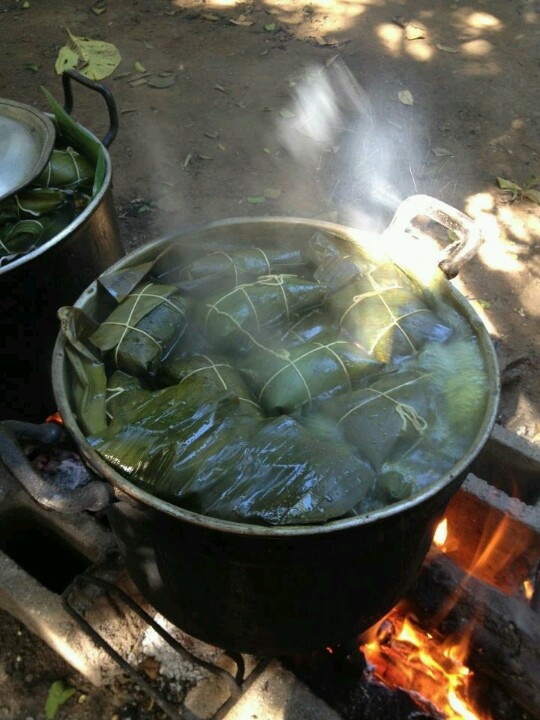
Tamales Ticos


Polis


Philosophy of Science: Jerusalem


Chess: "Polis" "The City" "Gotham" "Philosophy of Science: Jerusalem"

Monday, November 9, 2015

Kingston

Kingston
Star-spangled
Coffee
Café
Starbucks
Even
Evening
Jamaica

Psalm 50:23
"Whoso offereth praise glorifieth me: and to him that ordereth his conversation aright will I shew the salvation of God."


Kingston, Jamaica


Skull of a Skeleton with Burning Cigarette (Dutch: Kop van een skelet met brandende sigaret) is an early work by Vincent van Gogh. The small and undated oil-on-canvas painting is part of the permanent collection of the Van Gogh Museum in Amsterdam.


Chess: "Kingston" "Star-spangled" "Coffee" "Café" "Starbucks" "Even" "Evening" "Jamaica"

Thursday, November 5, 2015

O

O
Giotto
Momotombo
Guayabo
Florida
Sunshine
"LL" 
Cambute

Psalm 50:12


"If I were hungry, I would not tell thee: for the world is mine, and the fulness thereof."


Giotto
6. Meeting at the Golden Gate: San Joaquín y Santa Ana
1304-06
Fresco, 200 x 185 cm
Cappella Scrovegni (Arena Chapel), Padua


The hug and kiss in The Meeting at the Golden Gate are between by St Joachim and St Anne, the parents of Mary, the mother of Jesus. It is an extremely significant kiss: if it hadn't been, Giotto would not have painted it. According to Christian doctrine, Mary was born "immaculate", without the inherited taint of human sin. And according to Christian legend, her parents conceived her without having sex. An angel directed the childless couple to go separately to the Golden Gate in Jerusalem. When they meet, they kiss - and out of this kiss Mary is engendered.
The picture has striking details: the gateway's golden arch, the use of black in the cloak of one woman, and the herdsman (he's a figure in the story, too) who enters half cut-off by the picture's edge. But the foreground embrace is the main event. As these two massive bodies gently lay hands on each other, Giotto unites their forms into a single pointed arch.
The fusion of faces is even more forceful (look as close as you can). Their haloes intersect. Their hairlines join up. Their eyes meet to make a single pair of eyes. And there's a crucial volumetric impossibility, in the way that face touches face. For it seems that Anne's head passes behind Joachim's, as if she's just giving him a kiss on the cheek. Yet, at the mouth, her lips have come forward, and are directly pressed against his lips.
The faces squash. The volumes of brow and cheek and nose that would get in the way of this contact are somehow elided, compacted. With a flat icon, it wouldn't be felt, but with these so solid Giotto heads, you're made to experience a great passionate pressing and locking together of two separate beings.


Giotto di Bondone, Legend of St Joachim, Meeting at the Golden Gate, 1305 is an early depiction of the scene.
In the last fresco of the upper register the composition is concentrated on the encounter between Joachim and Anne: Joachim is accompanied by a shepherd, who is partly cut off in the fresco. On the one hand, Giotto uses this completely new device in painting to create the impression that the succession of pictures, intersected by the framework, would unfold before our eyes in one continuous procession. On the other hand, a figure cut short in such a manner increases the dynamics within the picture field and makes us focus on the action at its centre.
Even the verticals of the architecture and the golden arch of the city gate respectively illustrate and mirror the way the couple lean towards one another. The two meet on a bridge, on the border between the outside world and the security of the city. They embrace with great tenderness and kiss one another. The way in which the volumes of the figures fuse underlines the tenderness of the moment, in which the faces also melt, as it were, into one another.
The story of Mary's parents begins with a painful rejection and concludes with this intense encounter. The sensitive portrayal of their meeting already contains the germ for the start of the next narrative, which commences with the Birth of the Virgin Mary and which leads to the youth of Christ by way of the Bridal Procession of the Virgin.


Momotombo Volcano, Nicaragua


Momotombo Volcano, Leon, Nicaragua. Momotombo is a stratovolcano not far from the city of León. It stands on the shores of Lago de Managua. An eruption of the volcano in 1610 forced inhabitants of the Spanish city of León to relocate about 30 miles west


Monumento Nacional Guayabo  - Costa RicaEl Monumento Nacional Guayabo (izquierda), en Turrialba, es el principal sitio arqueológico del país


Holguin, Cuba El Salto Guayabo . photo by Raul Pulpo 


 Florida
Caladesi Island State Park, near Tampa - only accessible by ferry or private boat. Once there you can kayak through the mangroves, hike or picnic on the beach  


Florida's State Shell the Horse Conch... state bird is the Mockingbird, state flower is the Orange Blossom, tree is the Cabbage (Sabal) Palm, and of course, it's nickname is the Sunshine State.


Chess: "O" "Momotombo" "Guayabo" "Florida" "Sunshine" "Giotto" "LL" "Cambute"


Bondone, di Giotto: The Meeting at the Golden Gate (1305)

The Independent's Great Art series


The Meeting at the Golden Gate is one of the hardest to see of the frescos in the Scrovegni Chapel in Padua. It's in the topmost of the three bands of pictures, and at the end of a row, and your natural viewing position is by the entrance of the chapel, where there isn't room to stand back enough. Only the elevated, four-square eye of the camera can reveal what Giotto and his assistants saw when they painted it 700 years ago. As with many of Giotto's effects, the power of this kiss derives from how he does bodies.
The enormous solidity of Giotto's figures has always been appreciated. An early commentator, Cennino Cennini, said that Giotto had "translated the art of painting from Greek into Latin", meaning that he'd changed it from the flatness of a Greek-Byzantine icon to the solidity of a Roman statue. But the solidity wasn't consistently admired. To later, anatomically sophisticated eyes, the stout Giotto body could look like inarticulate bulk. The Irish neoclassical painter James Barry observed that, in Giotto, "all the parts of the body are much confounded together... they are (particularly in their flexures) as inartificially drawn as if copied from the bendings of a sandbag". What a brilliant description of Giotto's elbows: the bendings of a sandbag.
But for some 20th-century artists, this stout sandbag quality was exactly what they liked, and tried to imitate. It looked honest, primitive, childlike. It's Giotto who inspires Stanley Spencer's tubby, cuddly characters. "What ho! Giotto!" was his cry, when he got the commission to paint the Sandham Memorial Chapel. It was a dream come true, a chance to do a modern version of the Padua frescos.
The actual figures in Padua are too solemn to be cuddly. But their inflexible massiveness gives them a slowness of manoeuvre, a steadiness and a carefulness in the way they make contact with the world and each other. They seem incapable of committing or suffering violence (and it always feels wrong when the story compels them to be violent). Their characteristic gesture is the laying on of hands. They are great huggers.
The hug and kiss in The Meeting at the Golden Gate are between by St Joachim and St Anne, the parents of Mary, the mother of Jesus. It is an extremely significant kiss: if it hadn't been, Giotto would not have painted it. According to Christian doctrine, Mary was born "immaculate", without the inherited taint of human sin. And according to Christian legend, her parents conceived her without having sex. An angel directed the childless couple to go separately to the Golden Gate in Jerusalem. When they meet, they kiss - and out of this kiss Mary is engendered.
The picture has striking details: the gateway's golden arch, the use of black in the cloak of one woman, and the herdsman (he's a figure in the story, too) who enters half cut-off by the picture's edge. But the foreground embrace is the main event. As these two massive bodies gently lay hands on each other, Giotto unites their forms into a single pointed arch.
The fusion of faces is even more forceful (look as close as you can). Their haloes intersect. Their hairlines join up. Their eyes meet to make a single pair of eyes. And there's a crucial volumetric impossibility, in the way that face touches face. For it seems that Anne's head passes behind Joachim's, as if she's just giving him a kiss on the cheek. Yet, at the mouth, her lips have come forward, and are directly pressed against his lips.
The faces squash. The volumes of brow and cheek and nose that would get in the way of this contact are somehow elided, compacted. With a flat icon, it wouldn't be felt, but with these so solid Giotto heads, you're made to experience a great passionate pressing and locking together of two separate beings.
About the artist
Giotto di Bondone (c1267-1337) is a founding presence in Western painting. The Florentine master introduced 3D, in the solid volumes of his bodies and receding depths of his spaces. Legend cast him as a simple shepherd boy, discovered in the hills by the artist Cimabue doing pictures of sheep. His most famous work, the Navicella in St Peter's, Rome, decayed and has been repainted beyond recognition. But the great fresco cycles in Padua, Florence, and Assisi still survive.

Thursday, October 29, 2015

Cutty Sark

Cutty Sark
Connecticut
Connection
Wimbledon
La Katrina
Chac Mol
Tiger Woods

Psalm 37:2
"For they shall soon be cut down like the grass, and wither as the green herb." 

"And now it seems to me the beautiful uncut hair of graves." ~~~Walt Whitman: Song of Myself 6 l.102

 “The smallest sprout shows there is really no death;”~~~Walt Whitman: 14 Song of Myself 6, l.118


The ship, built at Scott and Linton's Dumbarton shipyards in 1869, was designed to sail to China for tea but when the Suez Canal was opened the route was more suited to steamships. The 'Cutty Sark' was then modified for use in the Australian wool trade.


 The Wimbledon Championships


Chac Mol, a mayan god, Chitchen Itza, Mexico


  Each year, the winner of The Masters is presented with the famous "Green Jacket." Slipping on the green jacket is the golden moment for many winners of the tournament. But how did a green jacket come to be such a big deal? What is the story behind the vaunted Green Jacket?
 But the Green Jacket presented to the Masters champion is one beautiful piece of outerwear. The tradition of the Green Jacket at Augusta National Golf Club dates to 1937.


Saybrook Breakwater Lighthouse, Connecticut.


La Katrina

José Emilio Pacheco

La obra narrativa de José Emilio está representada por tres libros de cuentos (La sangre de Medusa de 1958, El viento distante y otros relatos de 1963, El principio del placer de 1972); por dos novelas (Morirás lejos de 1967 y Las batallas en el desierto 1981) y por múltiples crónicas escritas en los suplementos y revistas en los que participó. Con respecto a sus cuentos, la autora Bárbara Bockus Aponte señala su carácter alusivo más que directo, su tendencia a la brevedad, y la escasez del detalle descriptivo o anecdótico11 . En sus cuentos aparece de manera constante el tema del paso del tiempo y de la repetición de la historia; también son usuales los universos de la infancia y de lo fantástico. Los textos fantásticos se distinguen “porque en un universo ficticio cognoscible y manipulable para los personajes”12 ocurre un hecho insólito que no es posible explicar. En el cuento perteneciente al libro El principio del placer, “Tenga para que se entretenga” encontramos a una madre (Olga) y a su hijo (Rafael) en el Bosque de Chapultepec, en el año 1943: de pronto, sucede lo insólito;
Rafael se entretenía en obstaculizar con una ramita el paso de un caracol. En ese instante se abrió un rectángulo de madera oculto bajo la hierba rala del cerro y apareció un hombre […] salió del subterráneo, fue hacia Olga, le tendió un periódico doblado y una rosa con un alfiler: -Tenga para que se entretenga. Tenga para que se la prenda.
El origen del personaje misterioso y sus razones para presentarse ante la mujer y el niño no son explicadas de manera definitiva por ninguna ley (ni la del mundo ficticio en que habitan los personajes, ni mediante las leyes de un universo maravilloso) La novela Morirás lejos “recrea la persecución de siglos que han sufrido los judíos hasta el Holocausto”8 , y en Las batallas en el desierto se encuentran los temas, abordados por Pacheco en varios de sus textos, de la destrucción de la ciudad y la infancia como un pasado en que el personaje descubre tanto el amor como el desengaño


Chess: "Cutty Sark" "Connecticut" "Connection" "Wimbledon " "Katrina" "Chac Mol" "Tiger Woods"