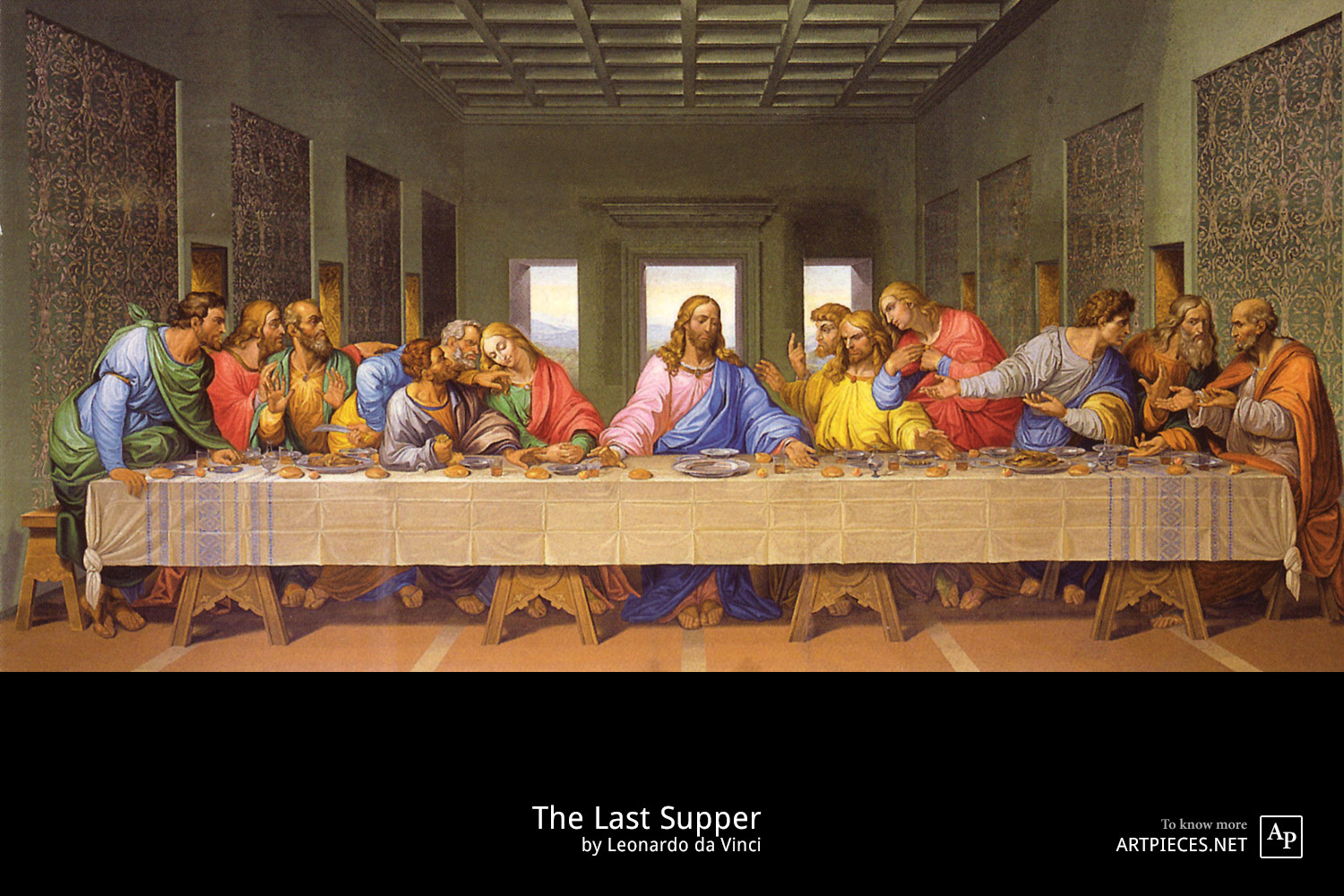
The Last Supper (1498)
By Leonardo da Vinci
📍 Santa Maria delle Grazie, Milan
“Now I understand why people can spend hours looking at the same painting.”
At first glance, it is perhaps the most famous religious image in history. Jesus and his twelve apostles are seated at a long table, sharing a final meal before his crucifixion. With its perfectly symmetrical room and formal arrangement, it feels like a traditional, static depiction of a sacred biblical event.
But look closely at the sheer, explosive chaos rippling through the men at the table. Notice how the apostles are frantically grouped into tight clusters of three, arguing, gasping, and leaning over one another. Look specifically at the dark-haired man leaning back in the shadows on the left, tightly clutching a small pouch of silver coins and accidentally knocking over a salt cellar. Then, look at the absolute, unshakable stillness of Jesus in the very center, entirely isolated from the panic.
The profound truth is that Leonardo didn’t just paint a dinner party; he painted a high-tension psychological thriller. He chose to capture the exact, shocking second immediately after Jesus drops a bombshell announcement: “One of you will betray me.” The painting is a masterclass in human reaction. Every single disciple is displaying a different, raw emotion—shock, anger, denial, and grief. Meanwhile, Judas (the betrayer in the shadow) is the only one physically pulling away, guiltily reaching toward the exact same dish as Jesus, silently fulfilling the prophecy.
The real genius of this piece lies in its flawless mathematics. Da Vinci used perfect one-point perspective—every single architectural line in the room converges exactly at Jesus’s right eye. No matter how chaotic the apostles become, the painting physically forces your eyes back to the quiet center.
Art doesn’t lie. It captures the exact second we realize that even in the face of ultimate betrayal and explosive human panic, true grace remains perfectly centered and completely undisturbed.
By Leonardo da Vinci
📍 Santa Maria delle Grazie, Milan
“Now I understand why people can spend hours looking at the same painting.”
At first glance, it is perhaps the most famous religious image in history. Jesus and his twelve apostles are seated at a long table, sharing a final meal before his crucifixion. With its perfectly symmetrical room and formal arrangement, it feels like a traditional, static depiction of a sacred biblical event.
But look closely at the sheer, explosive chaos rippling through the men at the table. Notice how the apostles are frantically grouped into tight clusters of three, arguing, gasping, and leaning over one another. Look specifically at the dark-haired man leaning back in the shadows on the left, tightly clutching a small pouch of silver coins and accidentally knocking over a salt cellar. Then, look at the absolute, unshakable stillness of Jesus in the very center, entirely isolated from the panic.
The profound truth is that Leonardo didn’t just paint a dinner party; he painted a high-tension psychological thriller. He chose to capture the exact, shocking second immediately after Jesus drops a bombshell announcement: “One of you will betray me.” The painting is a masterclass in human reaction. Every single disciple is displaying a different, raw emotion—shock, anger, denial, and grief. Meanwhile, Judas (the betrayer in the shadow) is the only one physically pulling away, guiltily reaching toward the exact same dish as Jesus, silently fulfilling the prophecy.
The real genius of this piece lies in its flawless mathematics. Da Vinci used perfect one-point perspective—every single architectural line in the room converges exactly at Jesus’s right eye. No matter how chaotic the apostles become, the painting physically forces your eyes back to the quiet center.
Art doesn’t lie. It captures the exact second we realize that even in the face of ultimate betrayal and explosive human panic, true grace remains perfectly centered and completely undisturbed.
No comments:
Post a Comment